KUALA LUMPUR, 2 AUGUST 2023 – Reef Check Malaysia (RCM) is working with the local community on Redang Island to rehabilitate coral reefs. The programme, implemented by their Cintai Redang team, is also supported by the Department of Fisheries, Laguna Dive Centre, Tioman Marine Conservation Group (TMCG), and Coralku Conservation.
The coral rehabilitation programme is funded by the National Conservation Trust Fund for Natural Resources (NCTF).
“The objective of the coral rehabilitation project is to conserve marine biodiversity through sustainable, community-based coral reef rehabilitation.” shared Putri Asma, Programme Manager of Cintai Redang.
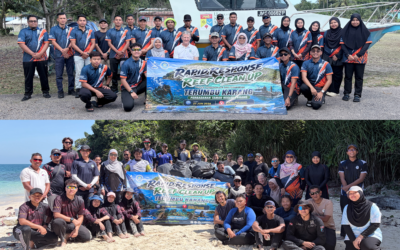
The local community marine conservation group from Tioman Island, Tioman Marine Conservation Group (TMCG), was also invited to share their experiences with the local islanders.
The knowledge-sharing session is particularly beneficial as RCM has also established a similar group with the locals in Redang Island called Redang Marine Conservation Group (RMCG). RMCG is a group of Redang youths passionate about marine conservation and trained to conduct marine conservation work alongside RCM’s team.
“Learning from TMCG member’s experience and success was really interesting and inspired us to continue growing our RMCG”, commented Muhaimin, who started as a member of RMCG and is now an Assistant Programme Manager of Cintai Redang.

The team planting coral fragments.
During the programme, different methods of coral rehabilitation were tested along with different coating. This is done to evaluate the survival rates of rescued corals. All the learnings will be published in a national toolkit and will be released to the public by the end of 2024.
Different structure designs were also used as part of the testing. Among the methods tested are using different coated metal frames, cement blocks, and coral clips.
Coral fragments, also called nubbins, are broken corals that are still alive and can be found lying on the sea bottom. Approximately 100 coral fragments were planted at each site – making a total of 300 coral fragments saved. Scheduled monitoring will then be conducted with the local community and marine biologists on-site to ensure the best survival rate.
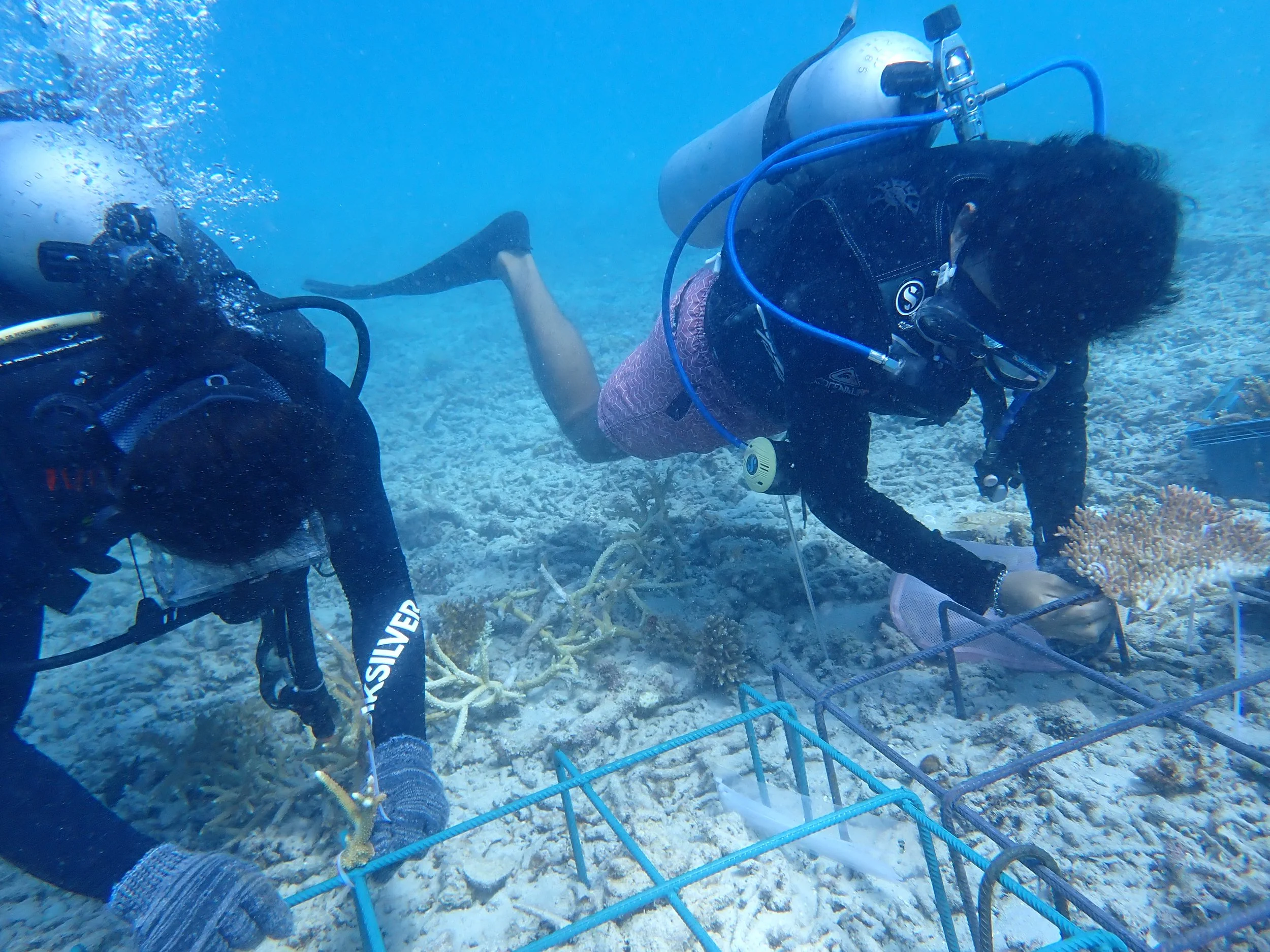
Different structure designs were used to plant the coral fragments.
The team is also developing a coral rehabilitation toolkit as a guideline for the most effective coral rehabilitation method suitable for a community-based restoration programme.
The teams also managed to remove ghost nets that were reported by snorkelers at Ekor Tebu. The ghost nets removed weighed around 50kg. Ghost nets harm marine life, especially when entangled in the reef, suffocating the corals and trapping the animals in the coral reef.
For more information on Reef Check Malaysia, you may visit them on their website, Facebook and Instagram or contact them at hello@reefcheck.org.my.