Crown-of-Thorns Starfish: What You Need to Know About This Coral-Eating Predator
Discover what crown-of-thorns starfish are, how they affect coral reefs, and why managing their populations is important for reef conservation.
What is a Crown-of-Thorns Starfish?
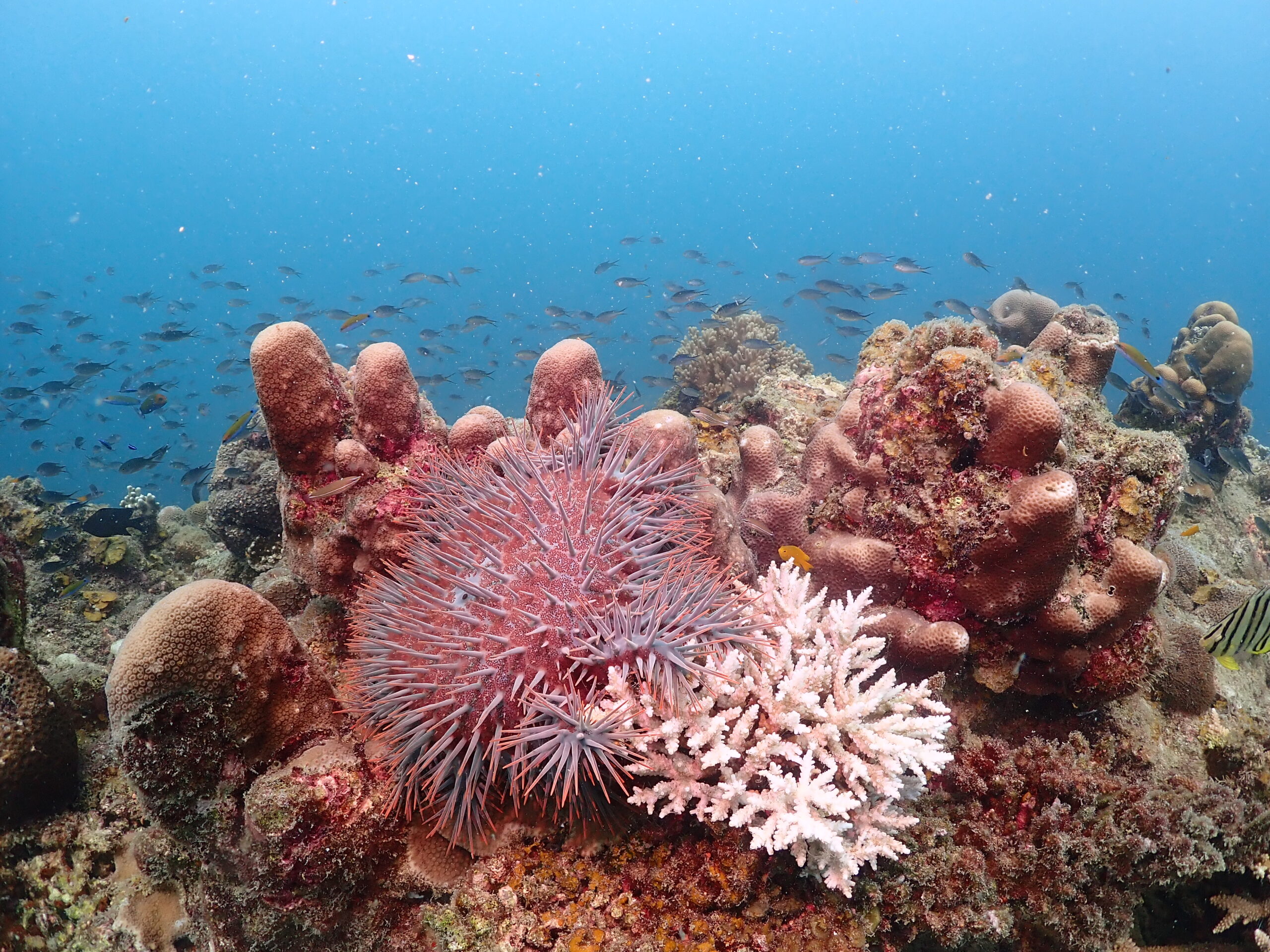
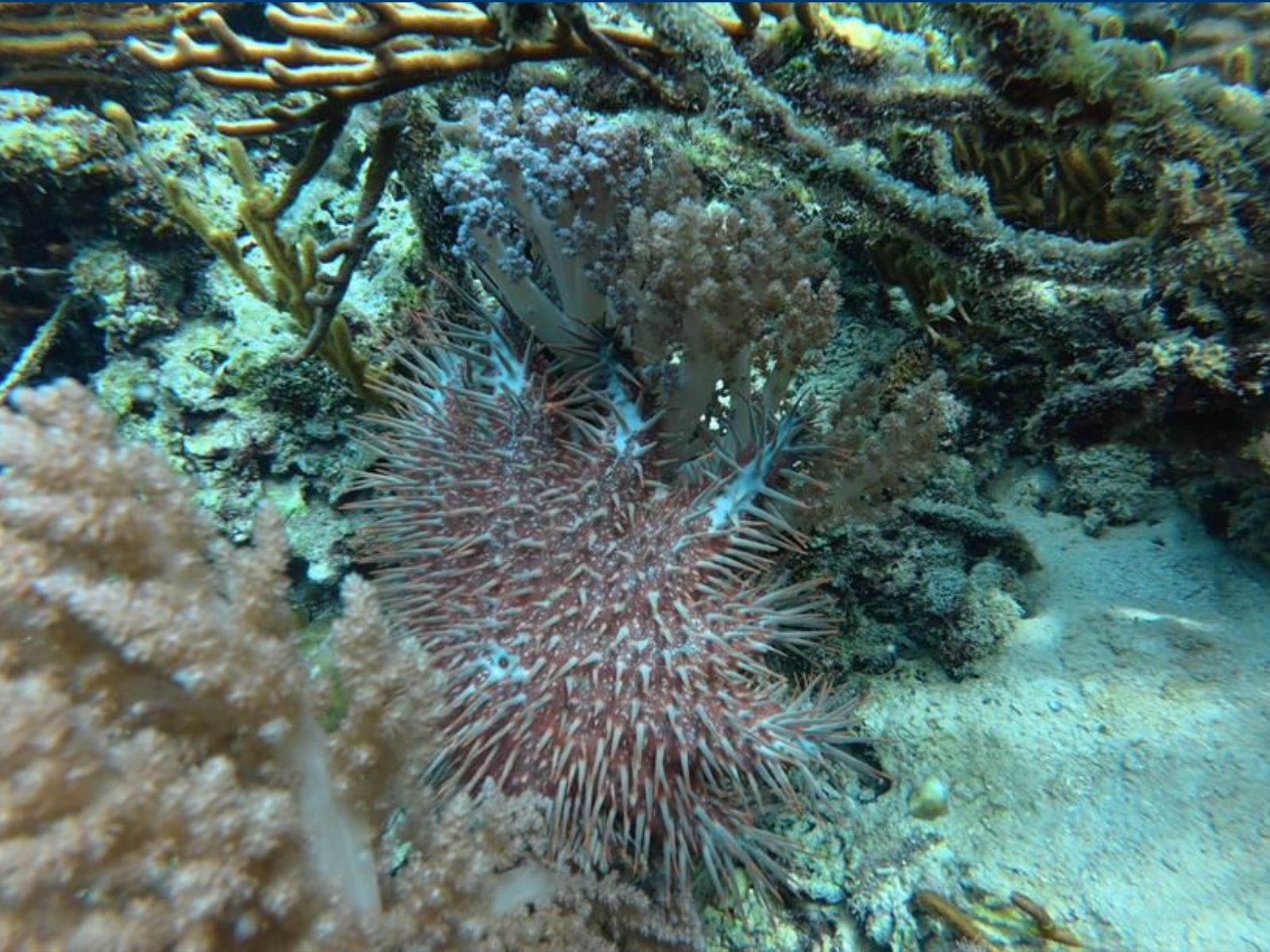
Crown-of-thorns starfish (COTS) (Acanthaster planci) are coral-eating marine invertebrates with venomous spines covering their upper body. COTS occur naturally on coral reefs across the Indo-Pacific region and are commonly found on reefs in both East and West Malaysia. While they are a natural part of the coral reef system, COTS outbreaks can cause widespread coral mortality and be a major threat to reef health.
Fun Facts About COTS
Are COTS Good or Bad?
Crown-of-thorns starfish are natural predators of corals. At healthy population levels, they help maintain the balance and diversity of coral reef systems by consuming faster-growing corals such as Acropora, allowing slower-growing species to thrive.
Natural COTS populations should remain typically low, at approximately 0.2-0.3 individuals per 100m².
How Do COTS Feed?
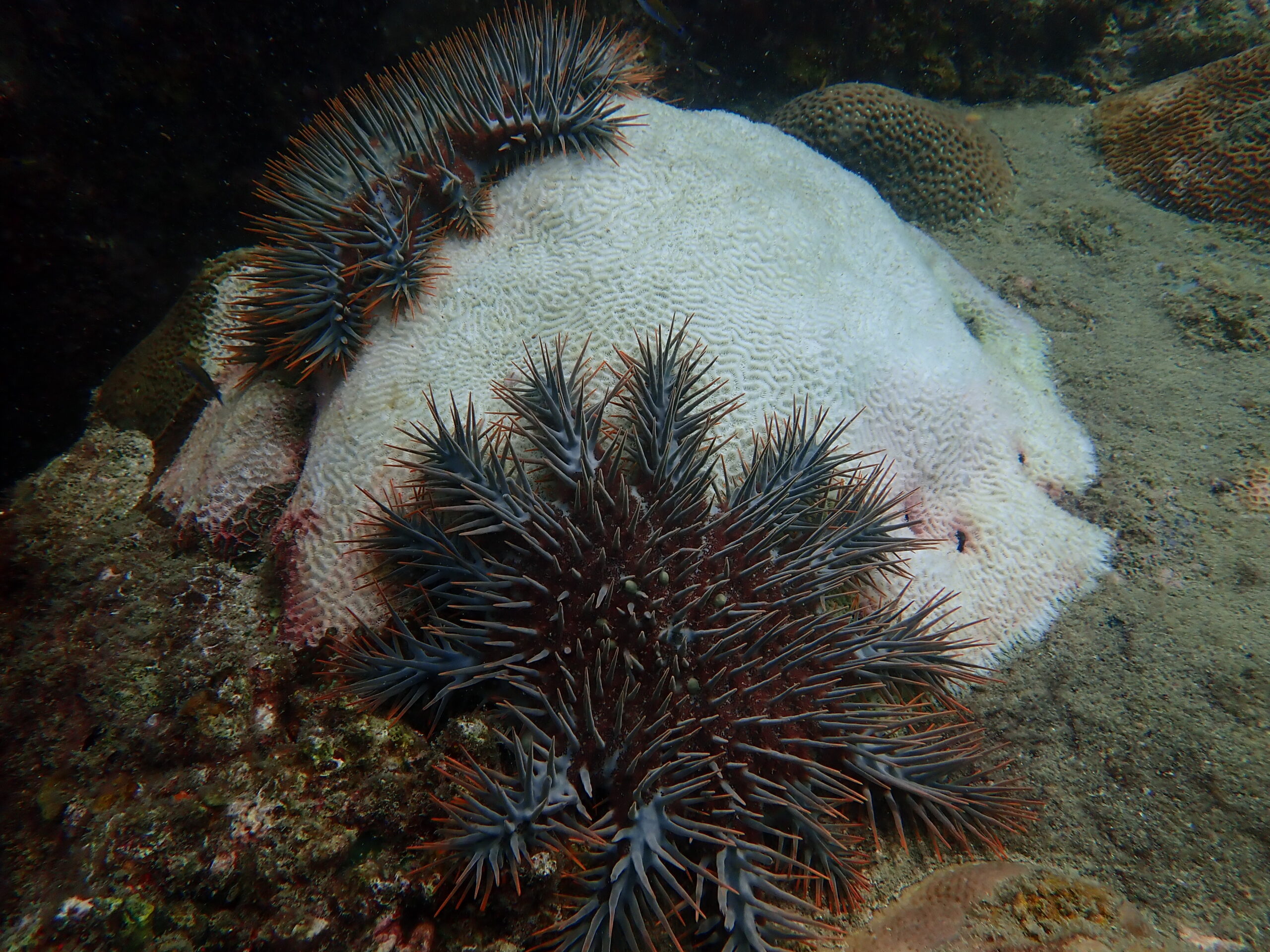
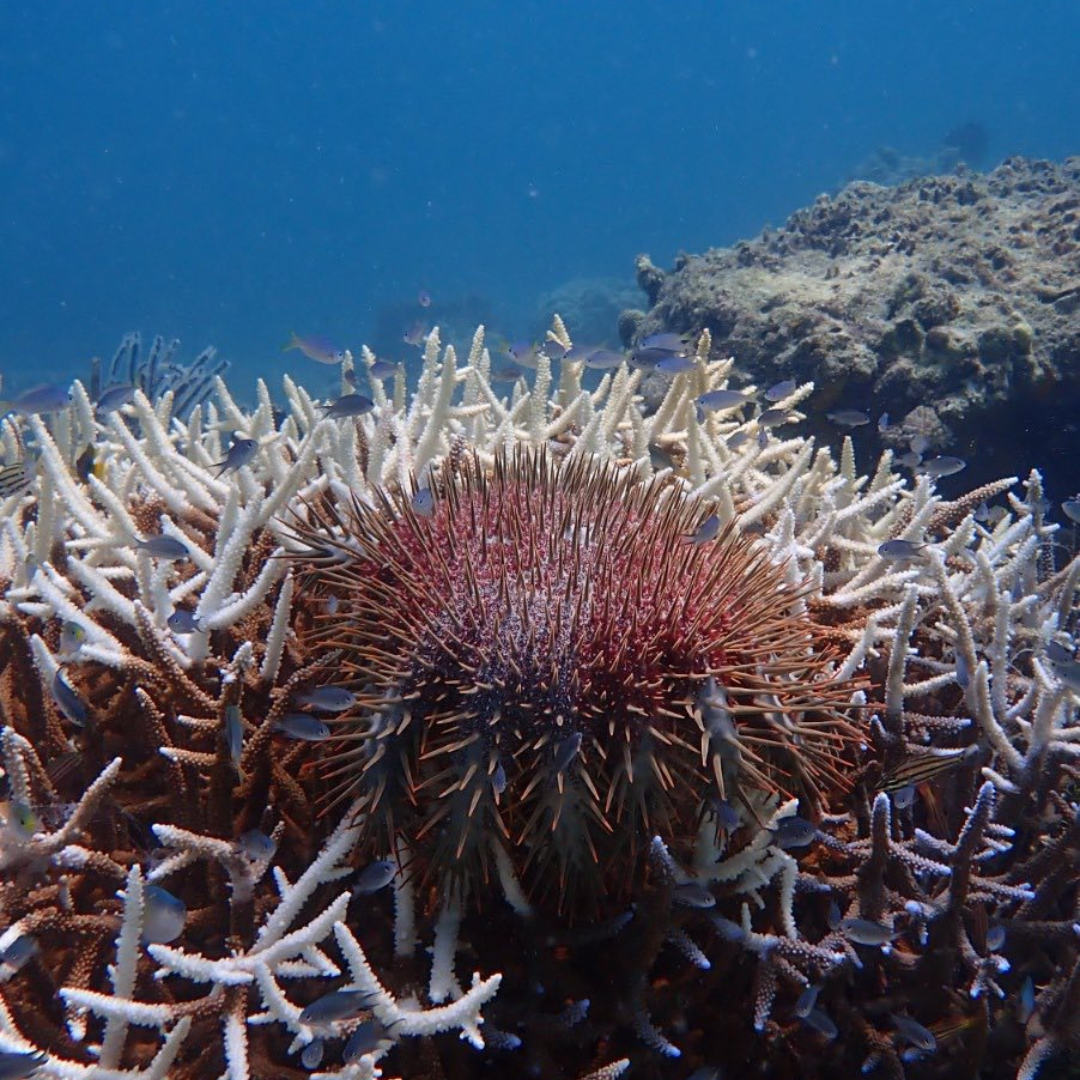
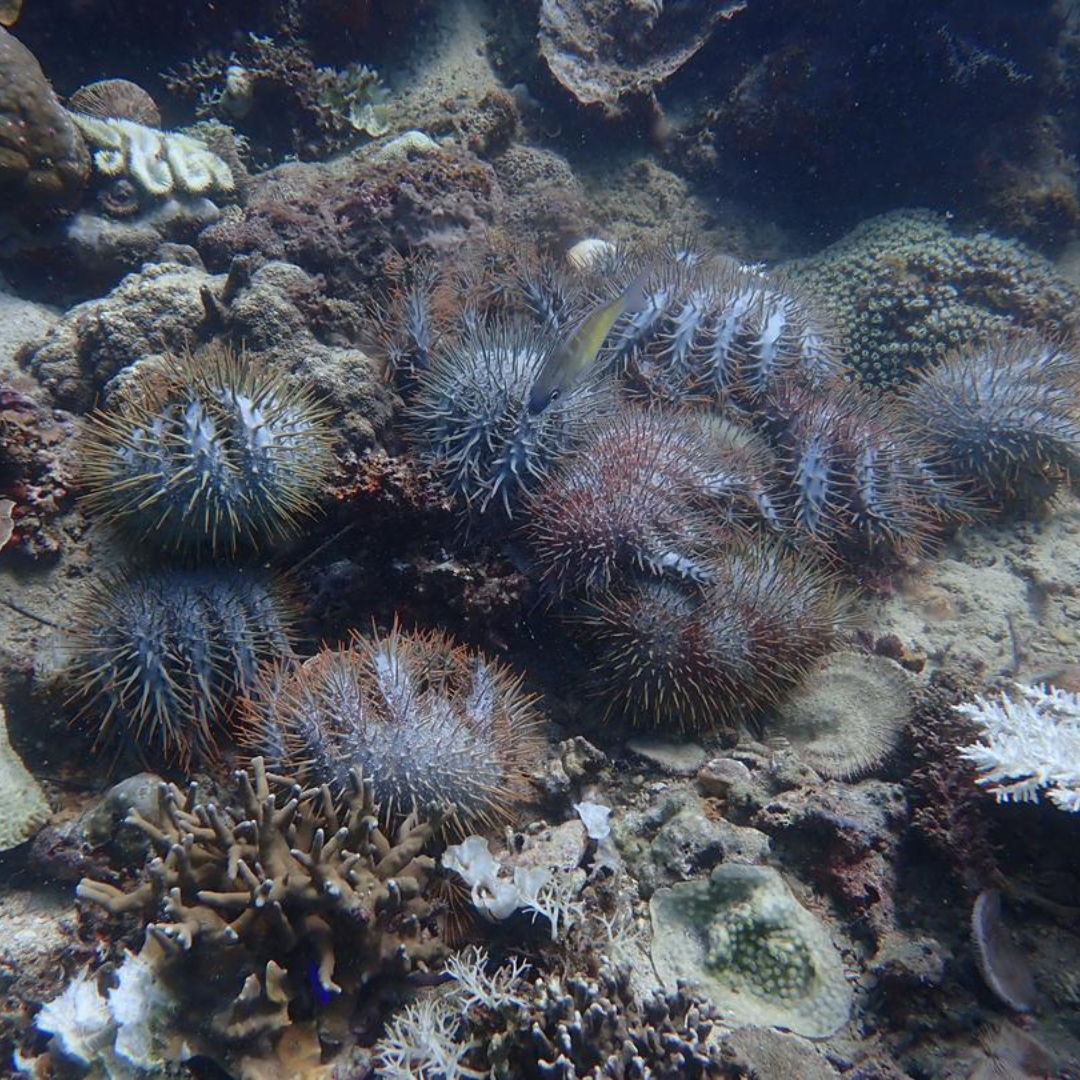
COTS feed by consuming and digesting coral tissue from the surface of corals, leaving the coral skeleton exposed. Their feeding leaves behind white scars, which are often one of the first visible signs of an outbreak.
They commonly feed on:
- Branching corals (especially Acropora)
- Plate corals
- Other hard corals
One individual Crown-of-thorns starfish (COTS) can eat 6m² of corals every year. Because they prefer fast-growing coral species, outbreaks can rapidly alter the structure, health and resilience of coral reef ecosystems.
How Do COTS Reproduce?
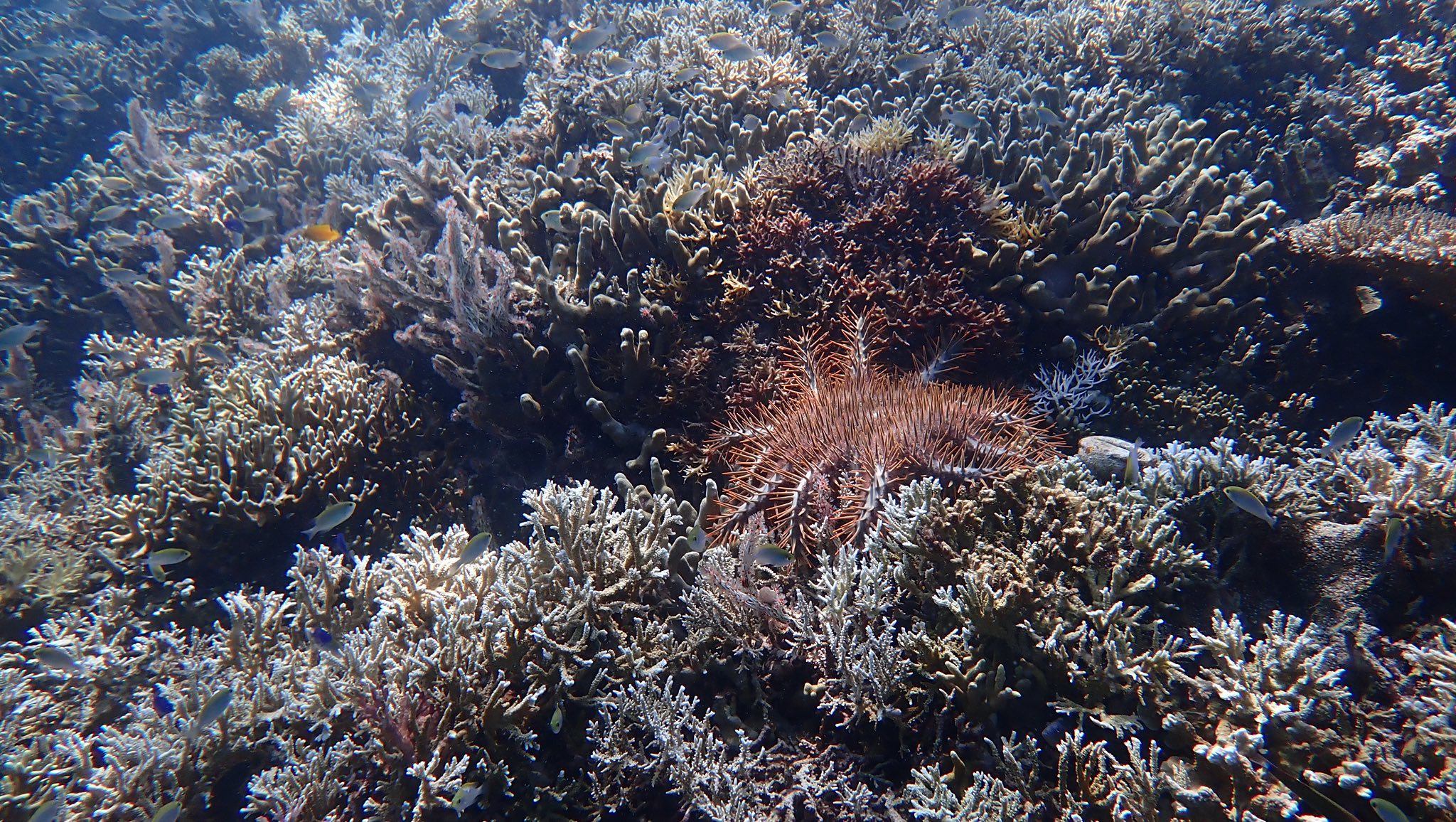
COTS reproduce by releasing eggs and sperm into the water column during spawning events.
In Malaysia, spawning periods generally occur during:
- May to June in Peninsular Malaysia
- October to December in Sabah and Sarawak. In Sabah, spawning is more influenced by warmer temperatures.
Fertilisation occurs externally with a single female producing millions of eggs. Under favourable conditions, large numbers of larvae can survive and settle onto reefs, contributing to outbreaks.
What Is A Crown-of-Thorns Starfish Outbreak?
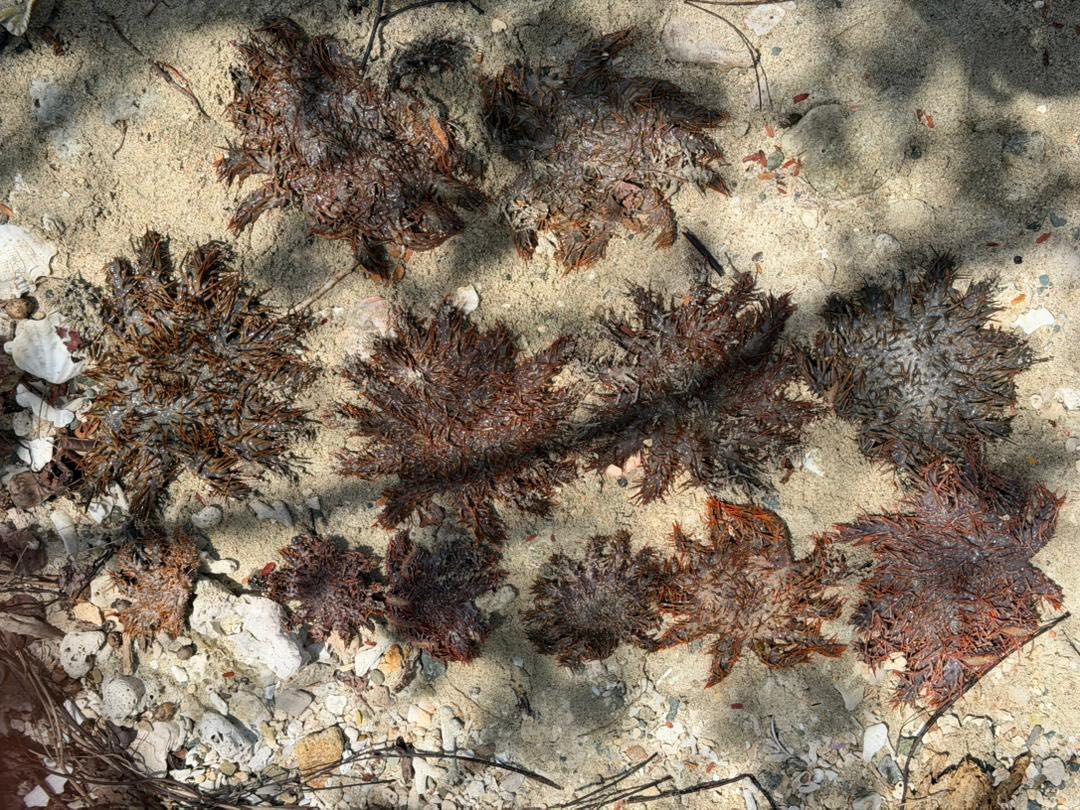
When the number of COTS exceed the typical number naturally occuring at a coral reef, a COTS outbreak is said to happen. When COTS outbreaks occur, they can lead to coral reef mortality and degradation.
Surveys across multiple sites on the east coast of Malaysia have recorded elevated numbers of COT densities or numbers. Left unmanaged, COT outbreaks can rapidly consume large areas of living coral tissue, exacerbating existing pressures from bleaching, sedimentation, and destructive fishing.
These escalating numbers highlight the urgency for immediate action to prevent further coral loss.
Why Do COTS Outbreaks Happen?
Scientists believe that multiple factors contribute to COTS population outbreaks:
- Increased nutrients in seawater, which promote growth of phytoplankton and improve the survival of COT larvae
- Loss of natural predators such as the giant triton snail (Charonia) and humphead wrasse. Due to human impacts, their main natural predators have been overfished and are hardly seen on most of the reefs.
- Climate change and warmer seas also favor COTS reproduction, causing population outbreaks in many different countries around the equator.
The War Against COTS - How To Manage COTS Outbreaks
Culling of COTS when there is an outbreak is necessary to reduce the amount of these coral-eating starfish to a level that supports the natural recovery of coral reefs. Fewer hungry adult COTS will also mean fewer COTS babies.
There are two methods commonly used to reduce the outbreak population of COTs in Malaysia and they are:
- Physically picking up COTS to remove them
- Injection of vinegar solution
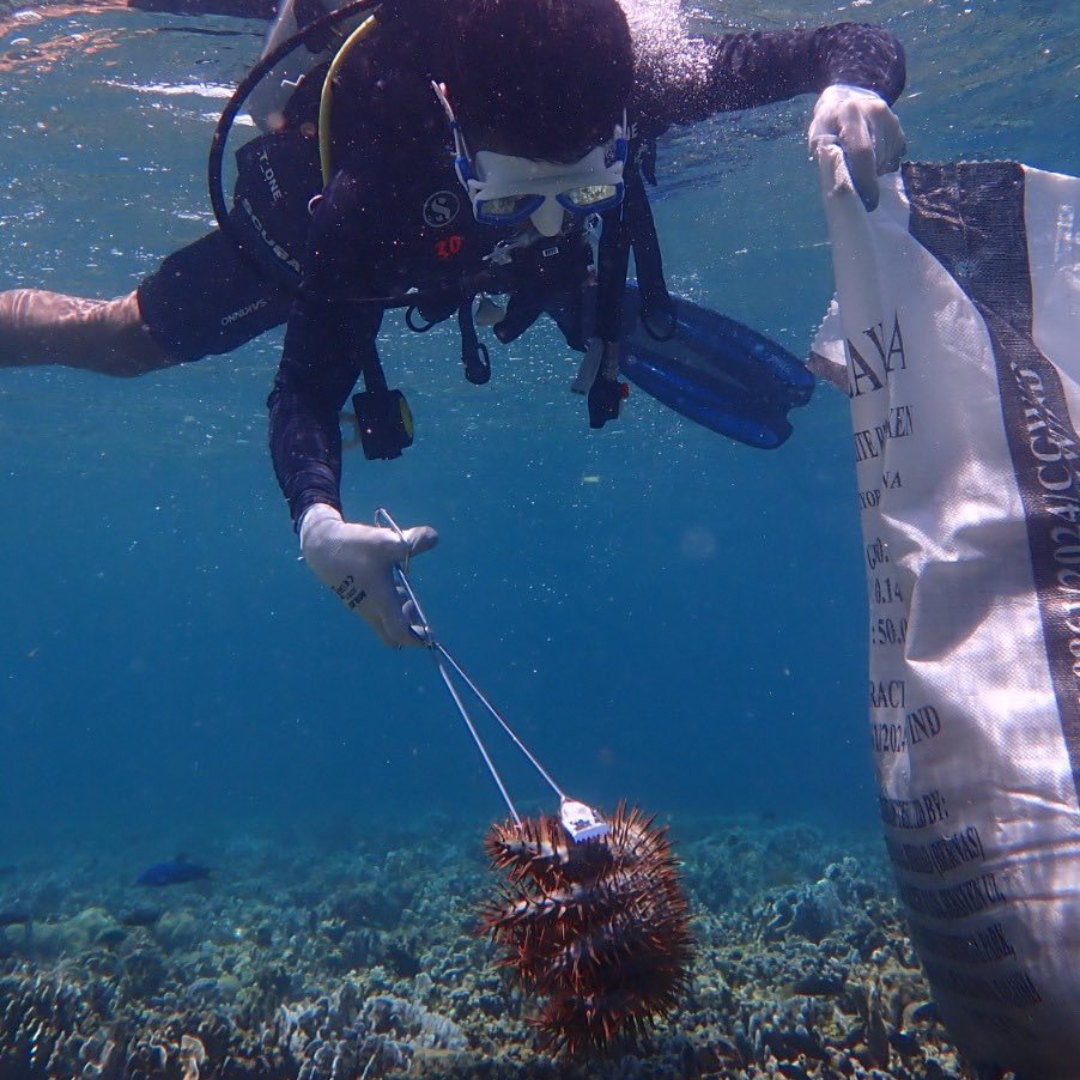
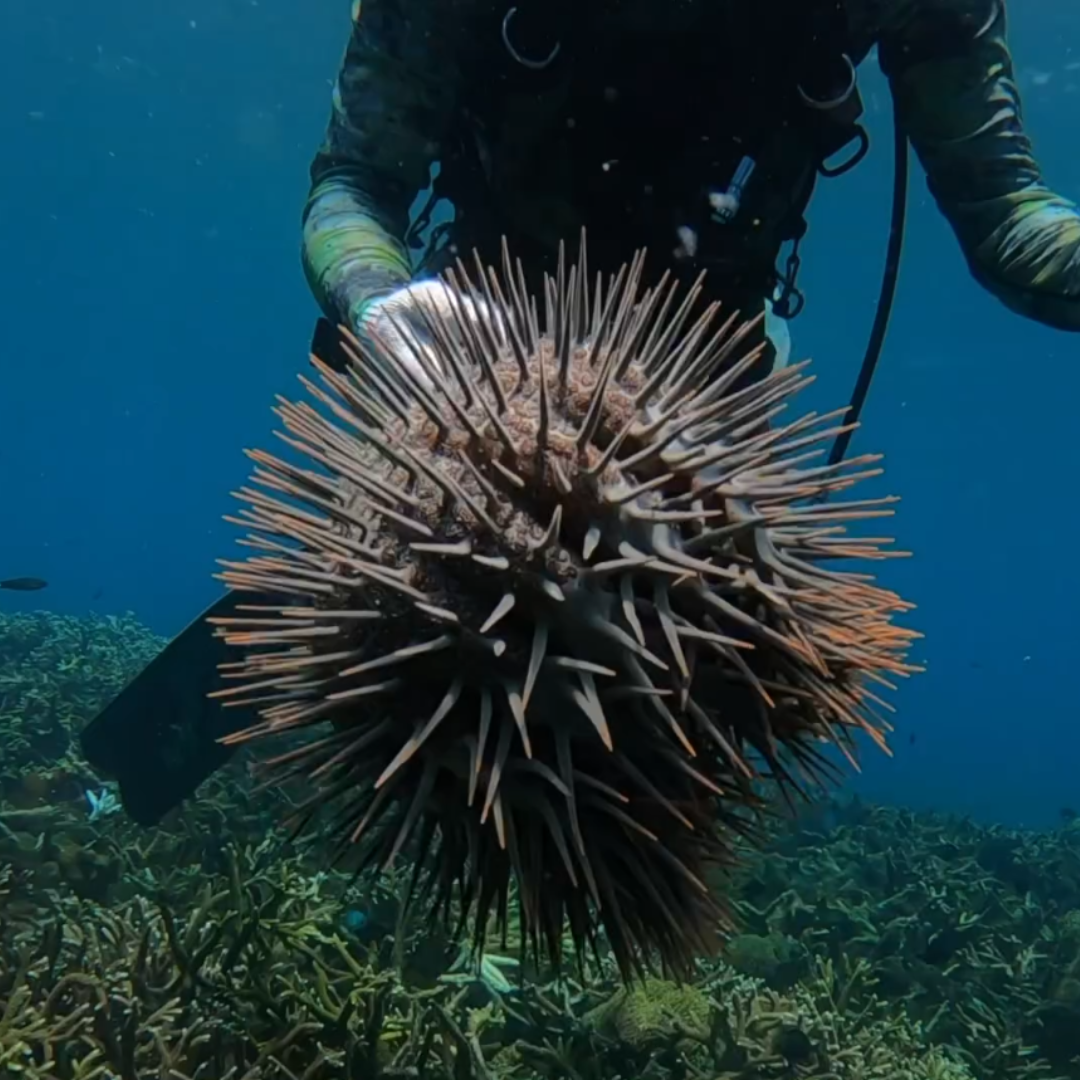
Physical removal of COTS from the reef by trained divers
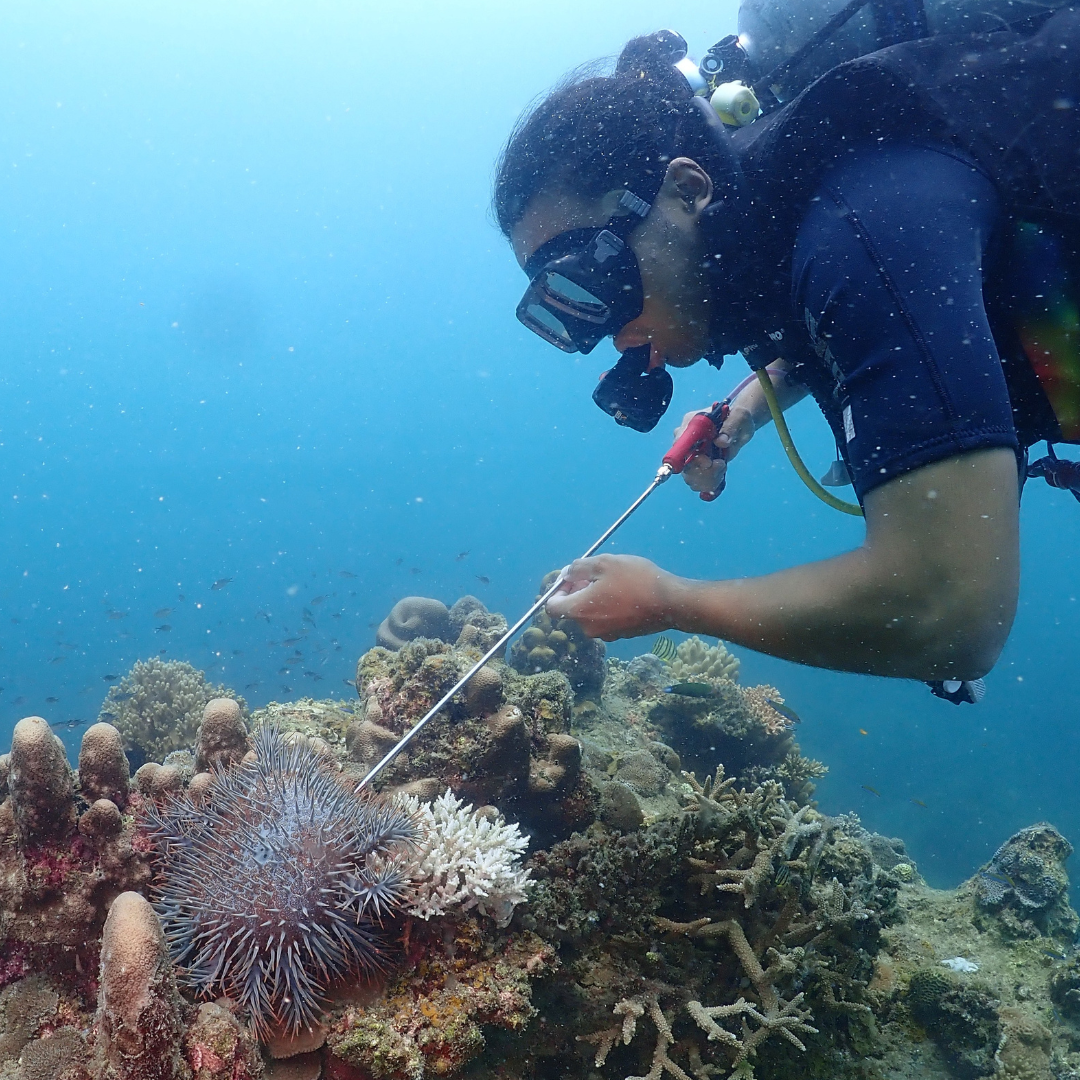
Injecting COTS with vinegar solution
What Can You Do When There's a COTS Outbreak?
Effective management of COTS outbreaks relies heavily on accurate and timely monitoring. If you spot a COTS, follow these steps to protect our coral reef:
1. Do not touch or handle COTS
Their sharp, venomous spines can cause intense pain and severe allergic reactions.
2. Do not cut or smash COTS
COTS can regenerate damaged body parts and possibly develop into a new starfish (if it contains a part of the central disc).
3. Note the location and numbers
Take note of how many you see. 15 or more COTS within a 1-hectare area is a common indicator of the outbreak.
4. Report the sighting
Contact the local marine park authorities or to us at Reef Check Malaysia. Giving theexact coordinates and depth can help response teams carry out targeted removal efforts.