
Assessing The Health of Our Reefs
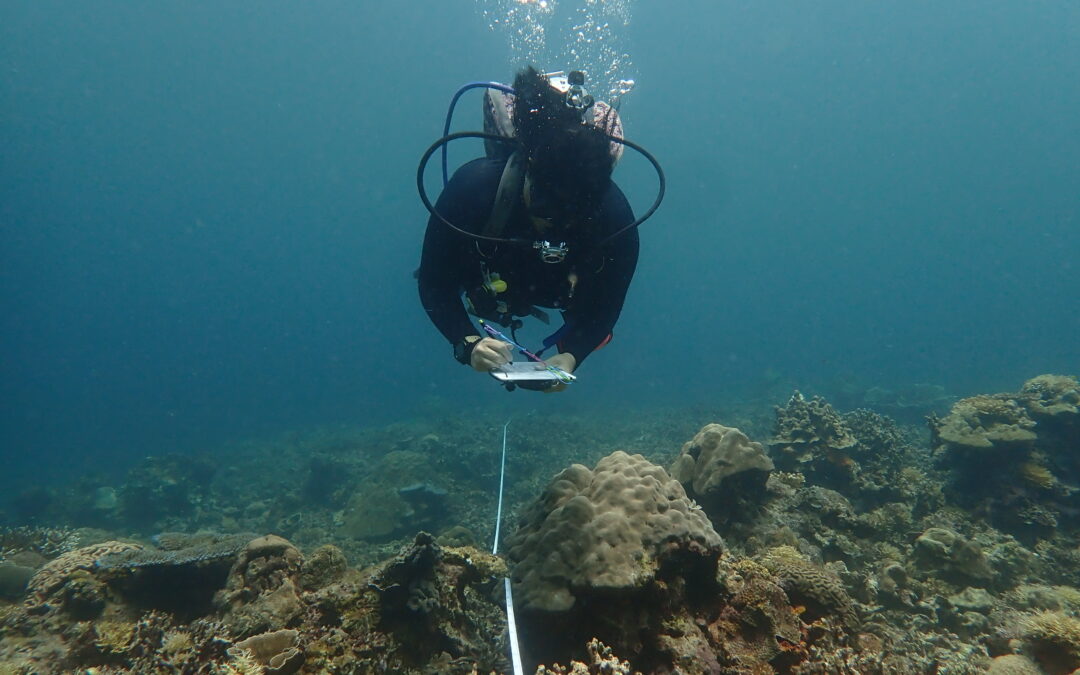
Just like a doctor runs a diagnostic checkup on your health, marine conservationists use the standardised global Reef Check Survey Methodology to evaluate our underwater ecosystems. By deploying trained divers who are called EcoDivers to measure specific biological and physical indicators along a 100-meter line, this methodology translates complex marine environments into clear, actionable data.
Rather than just counting pretty fish, the protocol focuses on three core categories—Physical Impact, Herbivores, and Water Quality—to evaluate a reef’s “resilience”. Resilience in this instance refers to the reefs’ natural capacity to self-repair and bounce back after climate-driven disturbances like ocean warming. Our CEO, has talked about resilience a number of times to emphasize the importance of building reef resilience including here, here and here.
Controlling What We Can
While the impacts of climate change are inevitable, we can actively help corals become resilient by minimising local, manageable stressors. Think of a reef like a human immune system: if it is already choked by pollution and stripped of fish, it stands zero chance of surviving a marine heatwave.
We cannot halt global carbon emissions overnight, but we can stop dropping anchors, regulate overfishing, and manage sewage discharge. By mitigating or lessening these localised threats, we clear the path for the reef’s natural recovery engines to work.
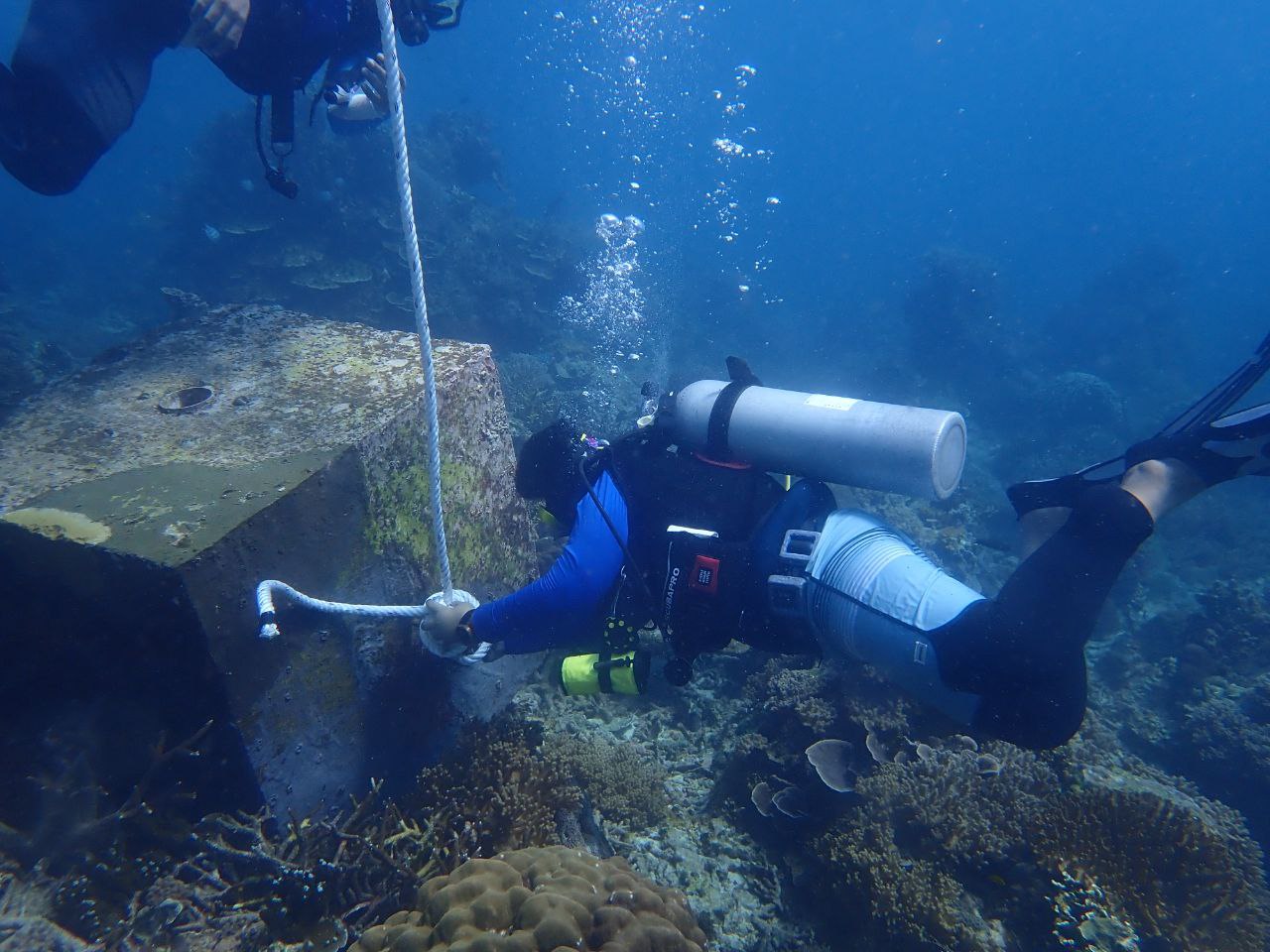
Mooring buoys are installed to reduce damage to reefs caused by anchoring.
Why It Matters: Food Security and Livelihoods
Many would not see the connection between coral reef health and how it can impact human survival, coastal economies, and global food systems.
As Reef Check Malaysia’s CEO, Julian Hyde, recently highlighted, the urgency is acute: Malaysia has lost the equivalent of 47,250 football fields’ worth of coral cover in just the last three years. (Read the full update on the Reef Check Malaysia 2025 Survey Results Blog).
1. Securing Protein:
Reefs are vital nurseries for marine life. When a reef collapses and shifts into an algae-dominated state, fish populations plummet, directly threatening the primary protein source for millions of coastal residents.
2. Sustaining Economies
For fishers, resilient reefs mean sustainable catches. When reefs degrade into barren rubble, local fisheries would slowly collapse, affecting coastal livelihoods.
3. The Tourism Lifeline
Coastal and islands hospitality relies entirely on vibrant reefs. Uncontrolled land-based pollution and physical destruction degrade dive sites, affecting the tourism industry, cause job losses, and state revenues.
Connecting the Dots: The 3 Core Indicators
The Reef Check method collect data on parameters that are tracked along the 100m-survey line – they are the literal pillars holding up our marine food supply and coastal jobs. If any single indicator shows unfavourable trend due to unmanaged human activities, the entire ecological foundation will start to crumble.
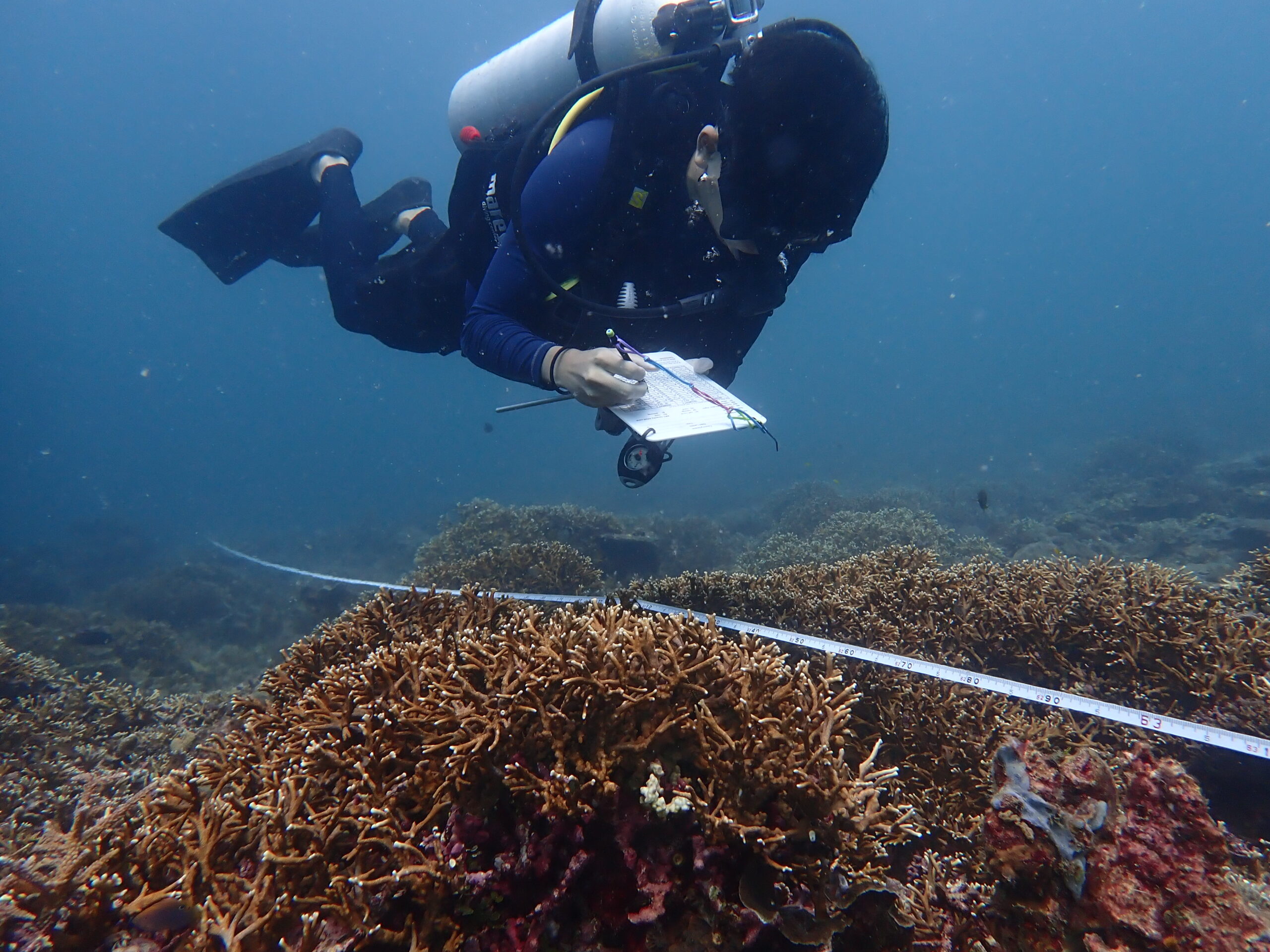
An EcoDiver conducting the Reef Check survey
1. Physical Impact: Protecting the Architecture
Physical impact measures structural damage to the reef substrate caused by human activities or severe storms. Divers document anchor damage, impacts of destructive fishing, marine debris, and diver trampling, alongside the abundance of loose rubble.
Complex reef structures provide essential habitats. Broken, shifting rubble fields crush fragile new coral larvae, actively blocking self-repair. This damage is driven by operational footprints like tourist boat anchors, reef trampling, overwater resort construction, and navigation channel dredging.
2. Herbivores: The Natural Keepers
Trained divers track major herbivorous fish (such as parrotfish and surgeonfish) and key invertebrate grazers (e.g. Diadema sea urchins).
Herbivores are the primary engines of reef recovery. By grazing on fast-growing macroalgae, they keep rock substrates clean for new coral larvae to grow. However, use of fishing gears such as gill nets and wire traps; coupled with rising consumer demand for reef fish at coastal resorts remove these vital algal managers, driving the ecosystem toward a suffocating algal state.
3. Water Quality: The Environmental Baseline
Water quality defines the baseline health of the water column, monitored via horizontal water visibility and specific biological indicators like the percentage cover of Nutrient Indicator Algae (NIA) and sponges. Clean, clear water ensures corals receive necessary sunlight and maintain the strong immunity required to survive devastating thermal stress and successfully reproduce.
Severe land-based challenges continuously degrade this baseline. Hillside clearing, urban expansion, and coastal construction cause massive soil erosion during tropical rains, introducing high levels of sediment and siltation that smother coral polyps and force them to expend critical energy clearing mud rather than growing.
Compounding this, rapid tourism expansion frequently outpaces local municipal infrastructure; when coastal resorts and businesses lack centralised wastewater treatment systems, poorly treated sewage and chronic greywater seep directly into the sea. This influx of nitrogen and phosphorus acts as an artificial fertiliser, sparking explosive blooms of Nutrient Indicator Algae that outpace what remaining herbivores can graze and heavily reducing coral thermal tolerance during sea surface temperature spikes.
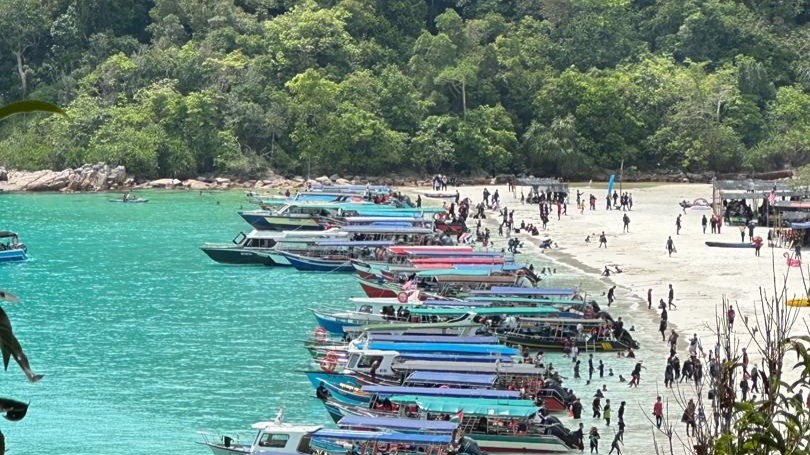
Boats filled to the brim at Redang's beach (photo by @imanredang)
From Data to Action: Mainstreaming Conservation
Reef Check data serves as an immensely useful diagnostic tool to forecast whether a local environment can survive climate anomalies. However, data must be seamlessly integrated into how we build our economies.
While we acknowledge and greatly appreciate policy-level interventions driving national strategies—such as the targets within the 13th Malaysia Plan (13MP) and the implementation of the National Policy on Biological Diversity (the NPBD)—frameworks alone cannot protect our coastlines. We are encouraged by the government’s commitment to the Ecological Fiscal Transfer (EFT) mechanism, which allocated RM200 million in 2024 and was scaled up to RM250 million for 2025.
Yet, we must seek equal financial support that directly matches the massive funding poured into traditional development programs.
Embedding Marine Conservation in Economic Development Policy
True sustainability requires a multi-pronged approach where conservation costs and ecological considerations become mandatory, upfront components of development planning process.
Economic planners and local councils should allocate equal financial backing to protecting marine resilience as they do to physical infrastructure, recognising that broad economic growth will be heavily impacted by the decline of marine and coastal ecosystem health.
Concurrently, commercial industries must be made responsible for their footprints; we need mandatory requirements for businesses—particularly in coastal tourism, maritime development, and commercial fisheries—to practice verified sustainability as a non-negotiable condition of their operational licensing.
Allowing our marine ecosystems to collapse triggers a catastrophic domino effect into economic decline. While we work toward global climate solutions, our immediate duty is to manage our coastal footprints and secure our shared future.
______________________________________________________________________________________
If you’d like to support us, you can follow our social media pages for any updates on our work and volunteering opportunities, or you could also donate towards our cause.