Ghost Nets: The Hidden Threat to Marine Life
Your content goes here. Edit or remove this text inline or in the module Content settings. You can also style every aspect of this content in the module Design settings and even apply custom CSS to this text in the module Advanced settings.
What Are Ghost Nets?
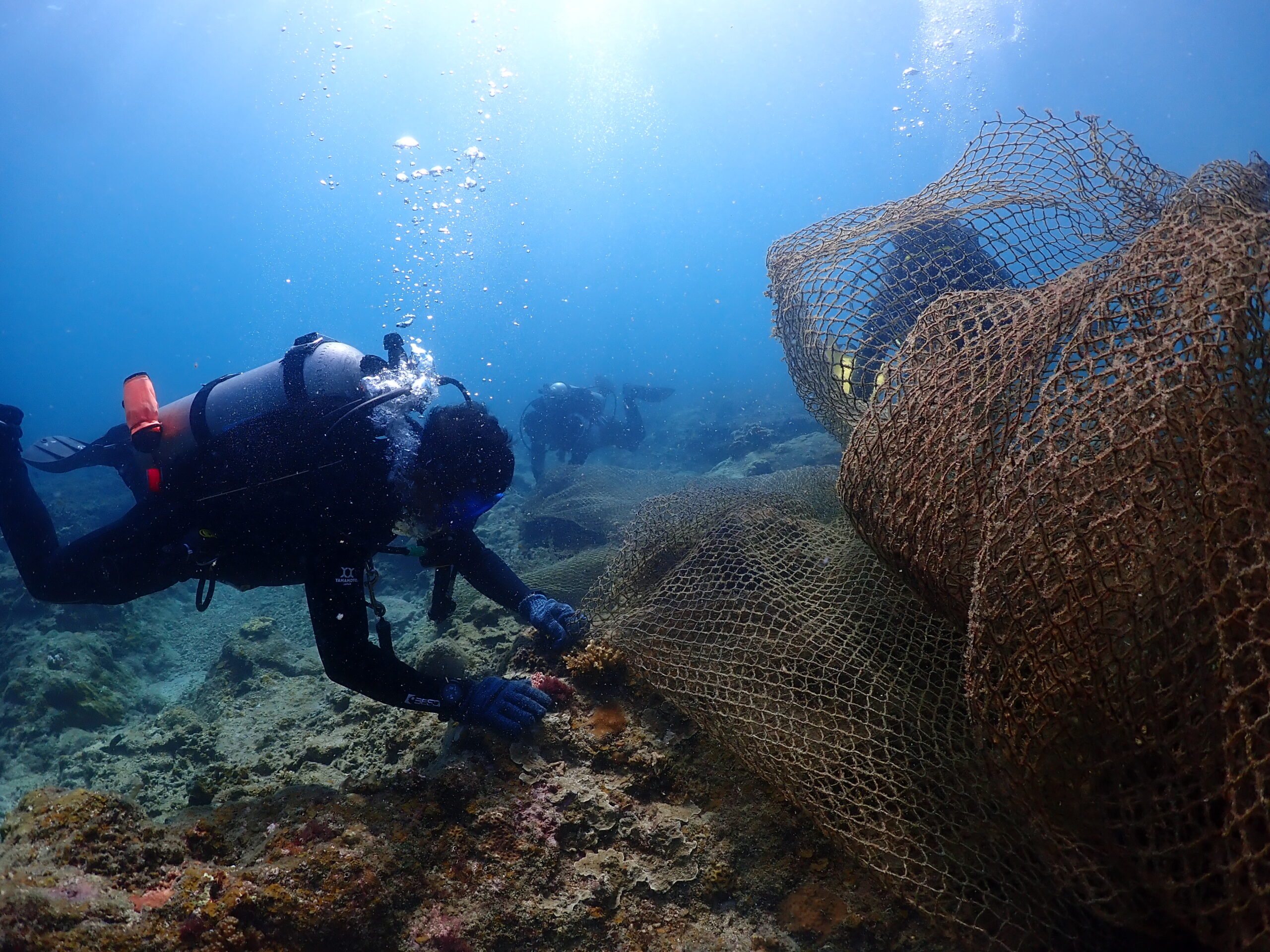
Ghost nets are fishing nets that have been abandoned, lost, or discarded at sea. Typically made from plastic materials such as nylon, these nets can persist in the marine environment for centuries.
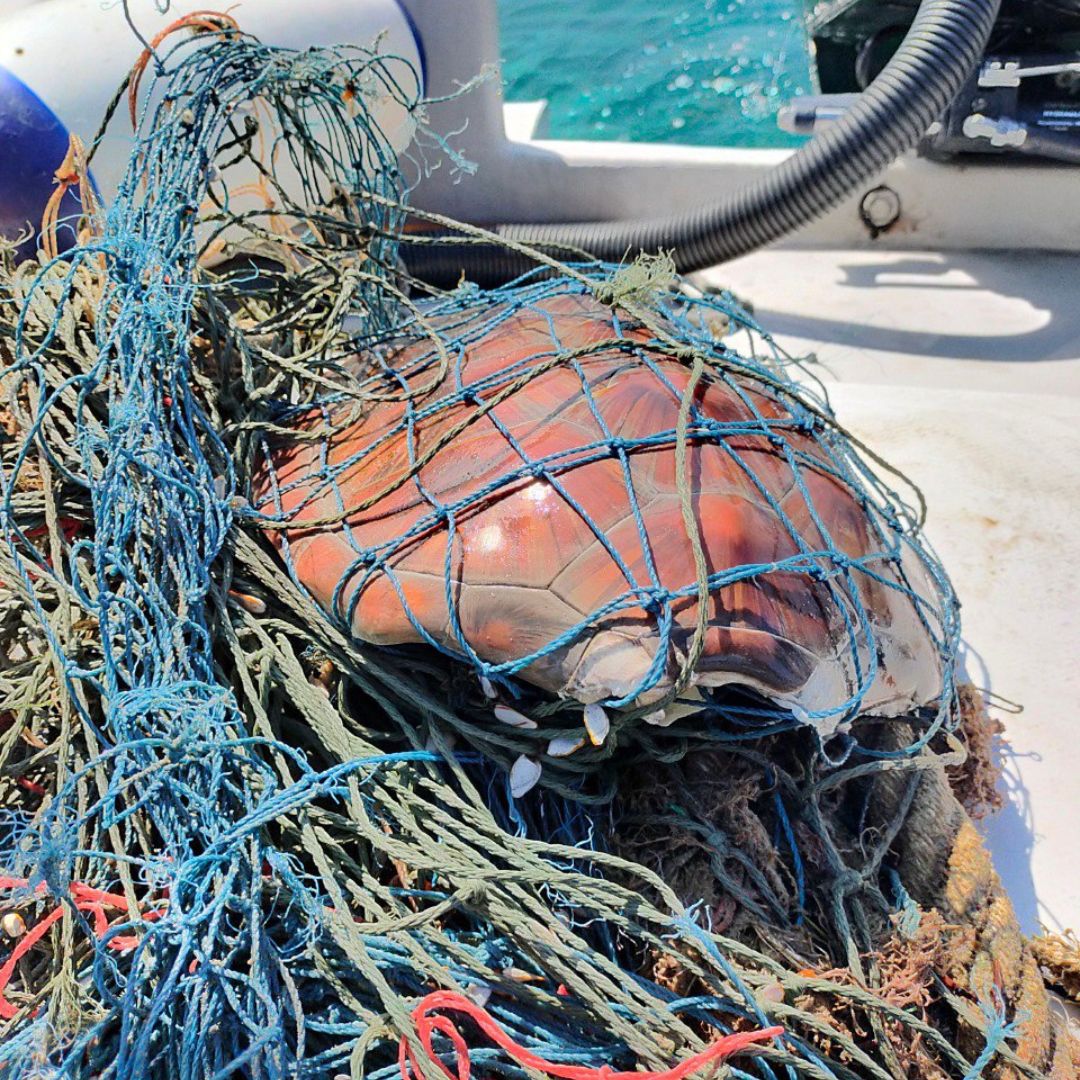
In the meantime, they continue to trap and kill marine life such as sharks, rays, sea turtles, whales, and seabirds, subjecting them injury, exhaustion, starvation, suffocation or drowning.
Ghost nets also damage coral reefs, smother marine habitats, and pollute shorelines. Because they continue to cause harm long after they are lost, ghost nets are considered among the deadliest forms of marine plastic pollution.
Why Do Ghost Nets End Up In The Ocean?
What Happens When Ghost Nets Are Left In The Ocean?
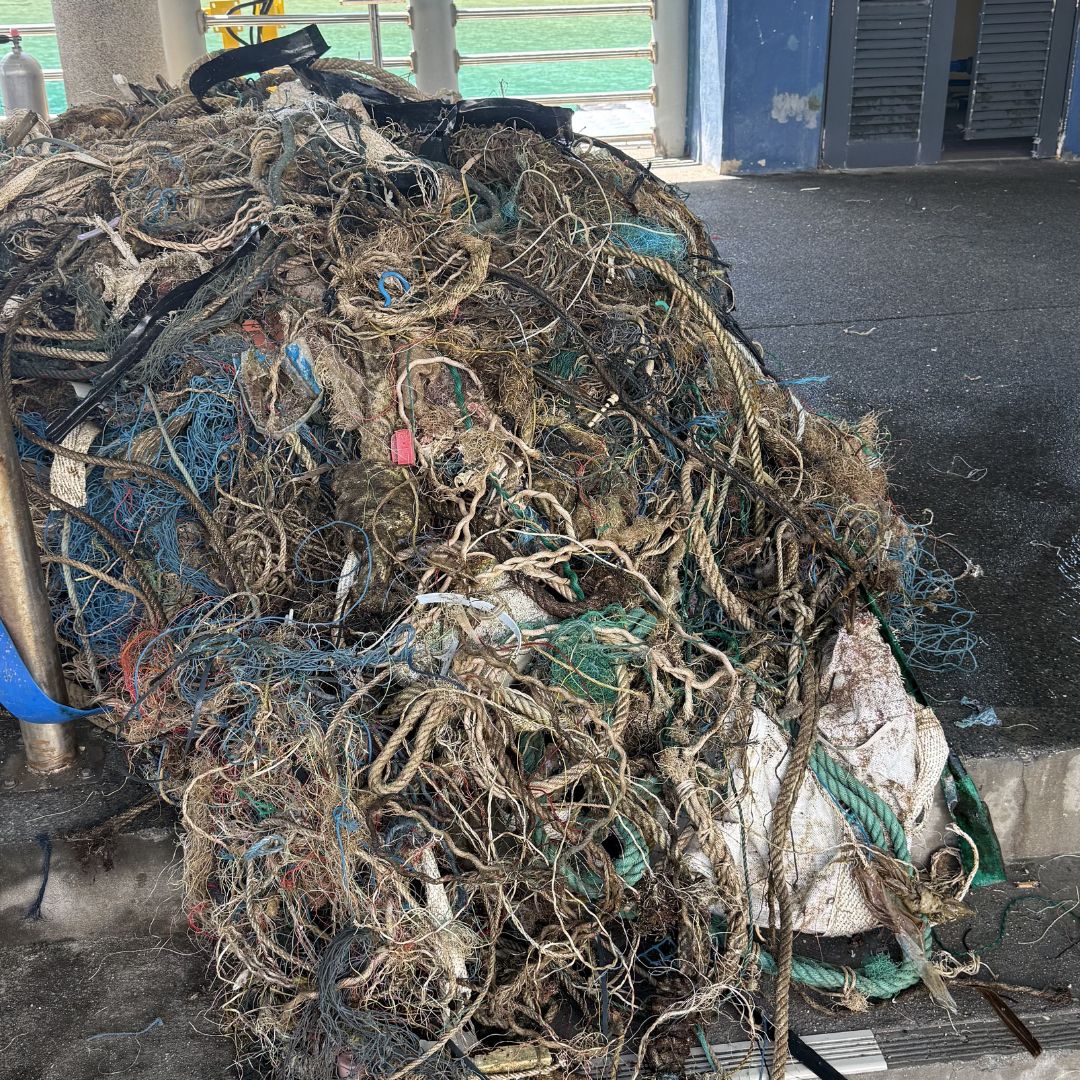
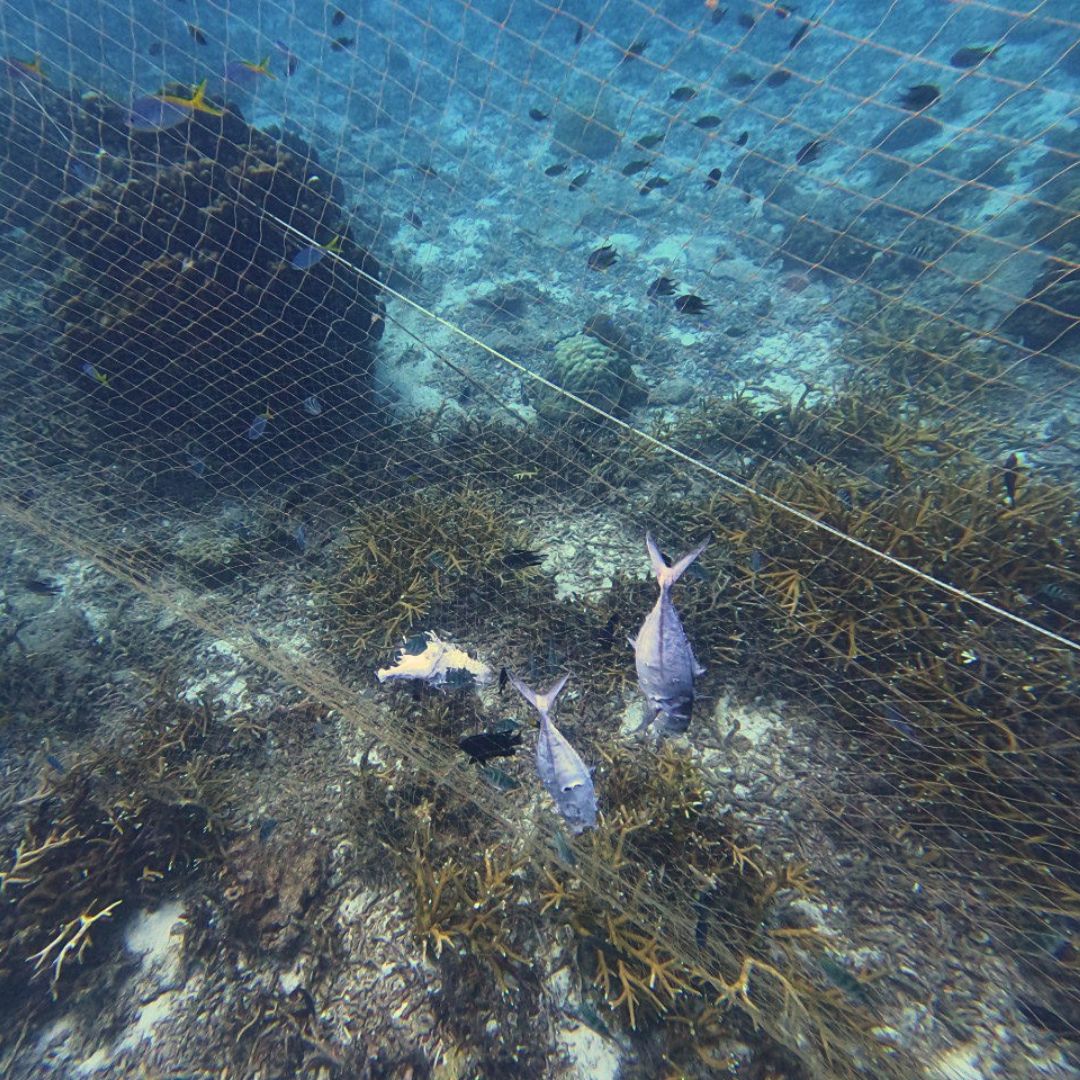
Left in the ocean, ghost nets continue to “fish” indefinitely, trapping, injuring, and killing marine life long after they are lost. This process is known as ghost fishing.
-
Ghost fishing and entanglement
Ghost nets can entangle a wide range of marine life, including fish, crustaceans, seabirds, marine mammals, and reptiles. Animals trapped in ghost nets may suffer from injuries, exhaustion, suffocation, starvation, or drowning.
Marine life can also ingest fragments of nets or lines, causing internal injuries, infections, toxicity, and digestive blockages that eventually lead to death.
-
Damage to coral reefs and marine habitats
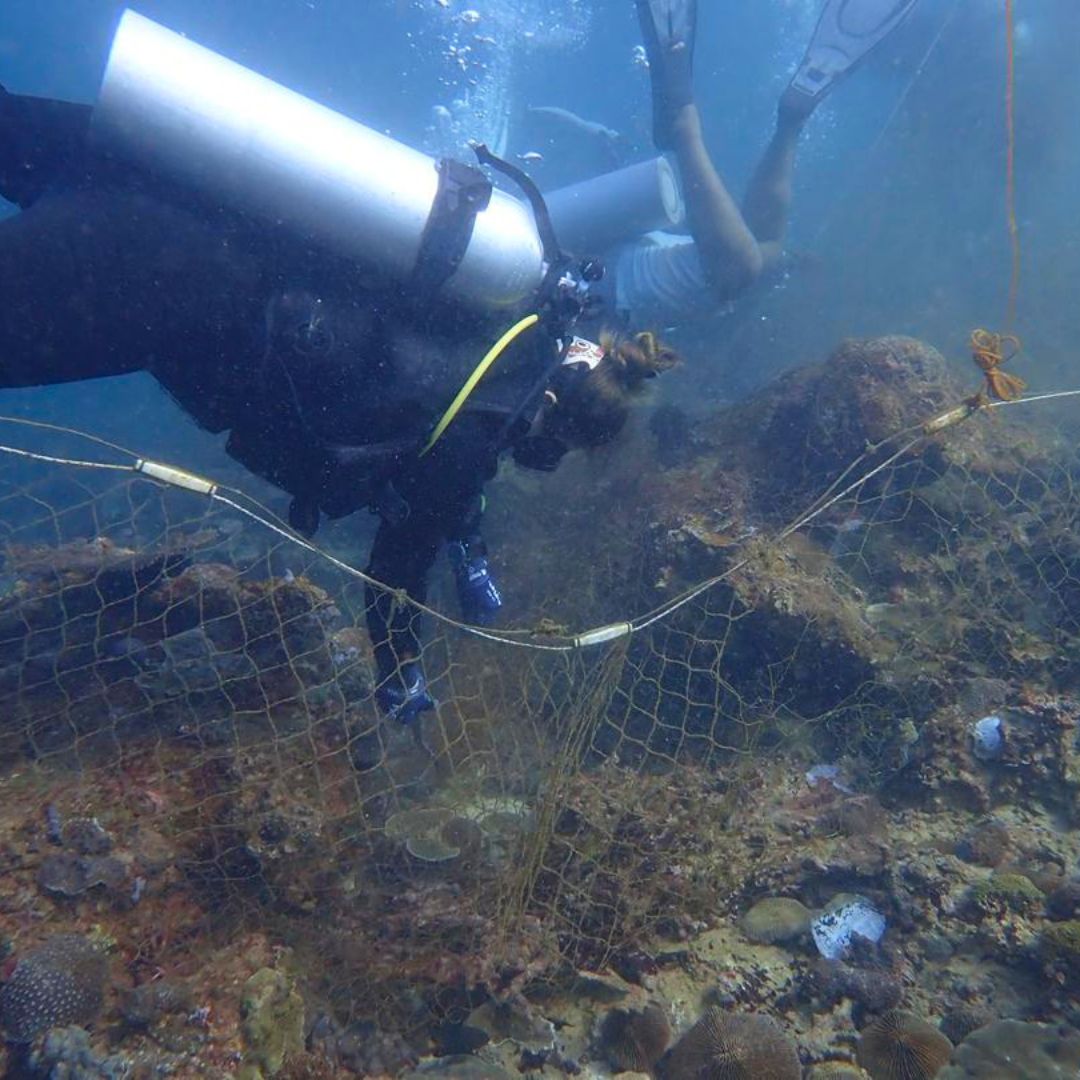
When ghost nets sink to the sea floor, they can break corals, damage marine vegetation, build up sediment, smother, and damage sensitive bottom habitats like coral reefs and seagrass beds.
These nets can also potentially reduce the sunlight that corals need to produce food through photosynthesis, slowly weakening or Killing the covered corals.
-
Major contributor to plastic pollution
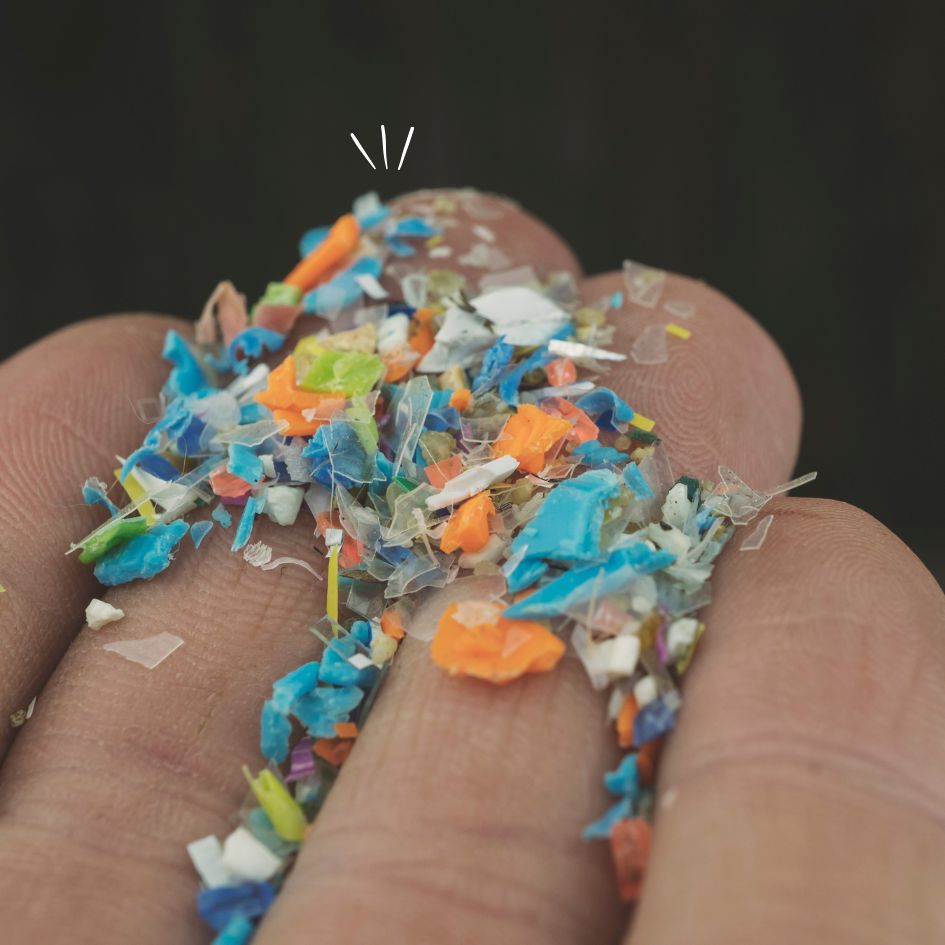
Most modern nets are made from nylon or other plastic compounds that can last for centuries. As abandoned nets and fishing lines slowly break down, they fragment into microplastics that remain in the marine environment.
Marine animals often mistake this microplastic for food, which can harm internal organs, keep them from eating and expose them to toxic chemicals.
What Is Reef Check Malaysia Doing About Ghost Nets?
Reef Check Malaysia works closely with local communities, dive operators, authorities, and conservation partners to respond to ghost net sightings and remove them safely from the marine environment.
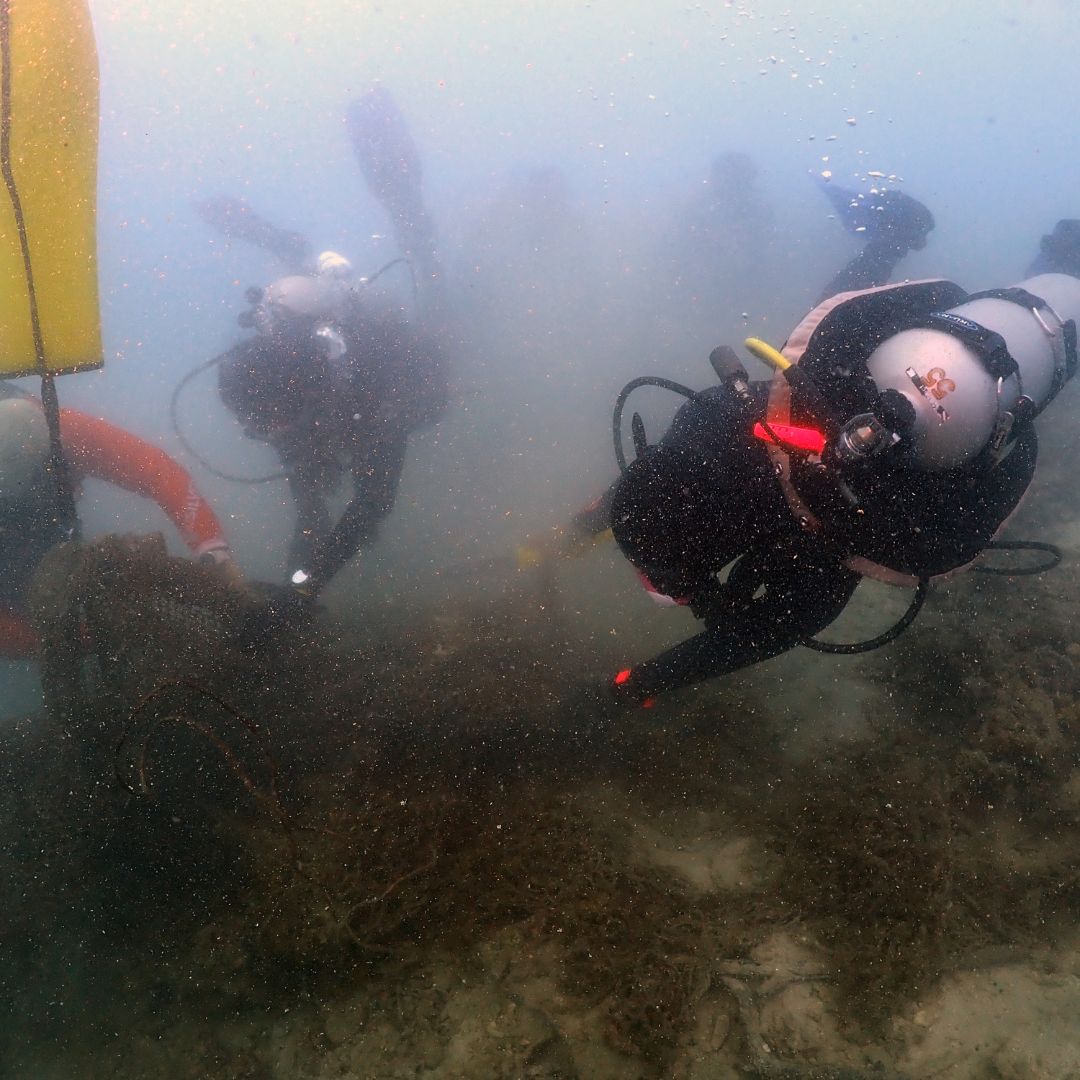
Rapid Response To Ghost Nets Sightings
When ghost nets are reported, Reef Check Malaysia mobilises its Community Marine Conservation Groups (CMCGs) and trained divers to assess the situation and plan a removal operation.
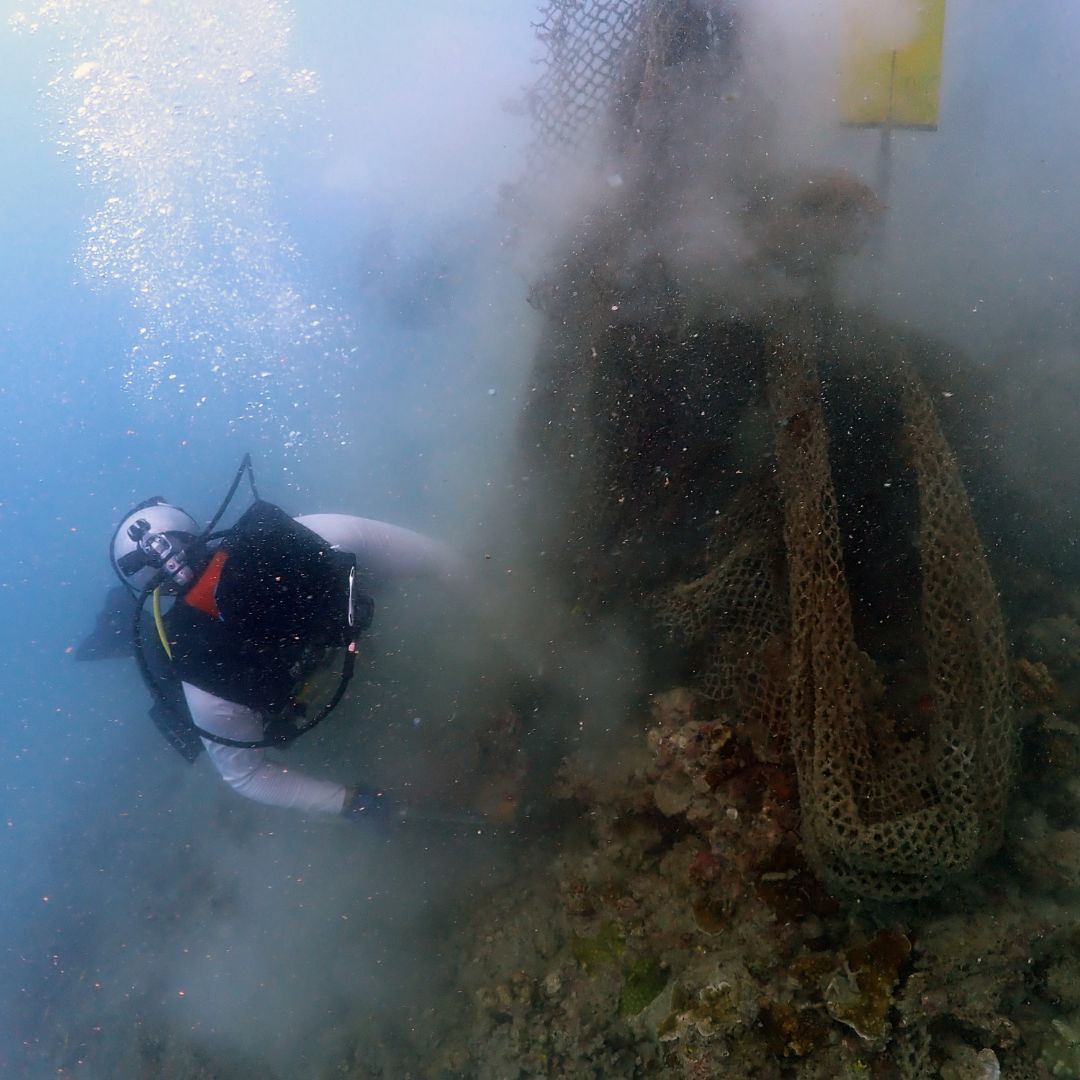
Removing ghost nets is highly technical and often dangerous work. Operations usually involve teams of experienced divers equipped with cutting tools, lift bags, ropes, and safety equipment.
During removal efforts, divers work carefully to:
- Untangle nets from coral reefs
- Minimize further reef damage
- Free trapped marine life whenever possible
- Safely lift nets to the surface for retrieval
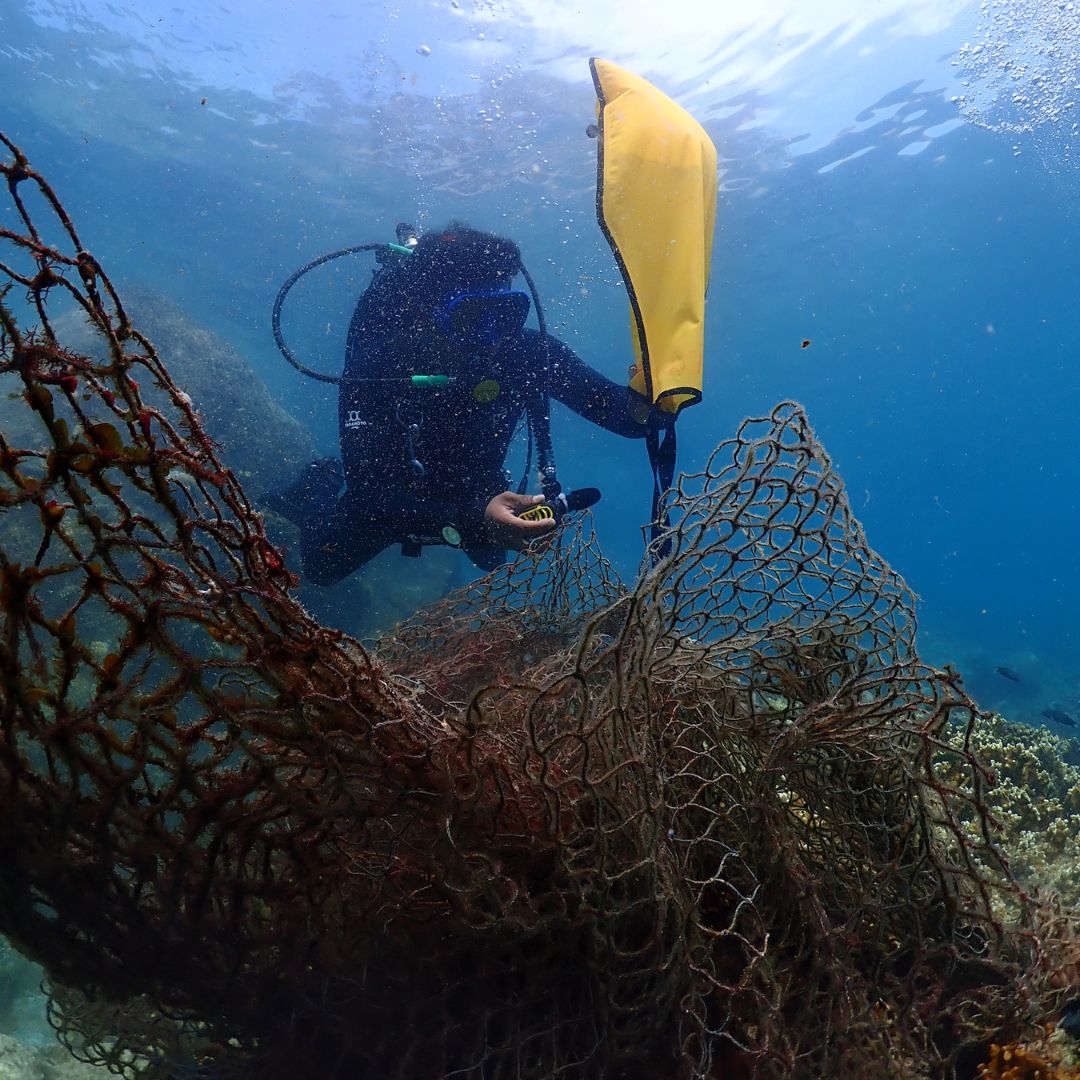
Safe Removal and Disposal Operations
Once removed, ghost nets are brought ashore and disposed of appropriately, recycled, or managed as waste in collaboration with local authorities and partners.
What Can You Do When You See Ghost Nets
Report ghost net sightings
If you spot a ghost net while diving, boating, or fishing, report it to the relevant authorities or conservation organizations such as Reef Check Malaysia, the Department of Fisheries (DOF) or the Marine Park managers such as Sabah Parks and Sarawak Forestry.
When reporting a ghost net, helpful information includes:
- GPS coordinates or map location
- Estimated depth
- Type and size of the net
- Nearby landmarks or hazards
- Photos or videos
- Any trapped marine life observed
Early reporting helps response teams act quickly and prevent further harm to marine ecosystems.
Do not attempt removal without proper training
Ghost net removal can be extremely dangerous. Nets can shift suddenly underwater, entangle divers, or damage sensitive reefs if handled incorrectly.
Only trained and experienced divers should participate in removal operations.
Learn ghost net removal skills
That said, if you’re an experienced diver, there are ways to get involved safely. Reef Check Malaysia, DOF and conservation partners conduct training for proper ghost net removal techniques. These trainings cover:
- Diver safety and rescue procedures
- Environmental best practices
- Use of lift bags and cutting tools
- Team coordination underwater
- Safe handling and disposal of recovered nets
The COBSEA's Ghost Gear Toolbox
The COBSEA’s Ghost Gear Toolbox is created and managed by the COBSEA Secretariat, in partnership with the Environmental Justice Foundation (EJF), Reef Check Malaysia, and the Reef-World Foundation, supported by Fisheries and Oceans Canada.
Watch this YouTube playlist to learn about ghost nets, the step-by-step ghost net removal process, and how to process and dispose of the ghost nets after retrieval.
Ghost Nets: the Silent Killer of The Ocean
Other Marine Debris