Cintai Mersing:
July – September 2025
Awareness Programs with Local Communities
Between July and September, two community awareness programmes were held to promote marine conservation in the Mersing Islands. Over 100 visitors visited Reef Check Malaysia’s exhibition booth to learn about local initiatives. We also thank the Malaysian Maritime Enforcement Agency (MMEA) for collaborating with the Endau community, and eight teachers from SK Taman Merdeka, Melaka for joining the Edu-Marine Programme at SK Pulau Sibu.
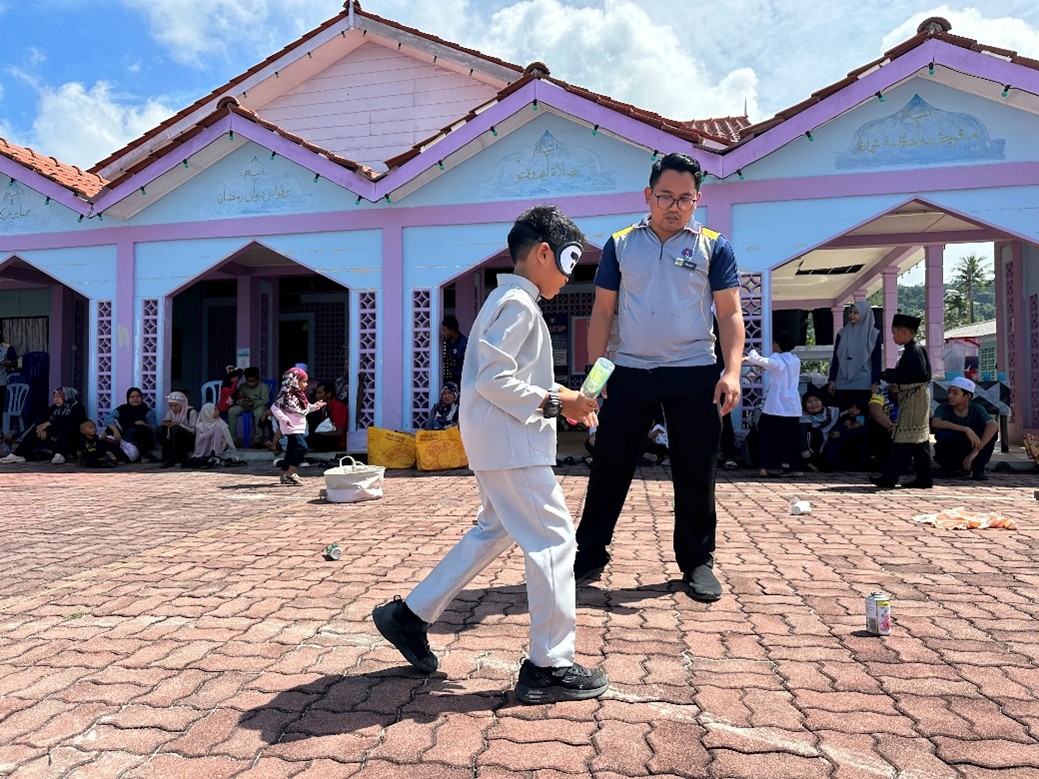
A “Blindfold Recycling” activity was held with the Pulau Tinggi community and school, involving 11 families. In this fun game, participants worked in pairs (one blindfolded) to collect and sort waste into recyclable and non-recyclable categories within five minutes. The activity promoted teamwork while raising awareness on proper waste segregation and better waste management practices on the island.
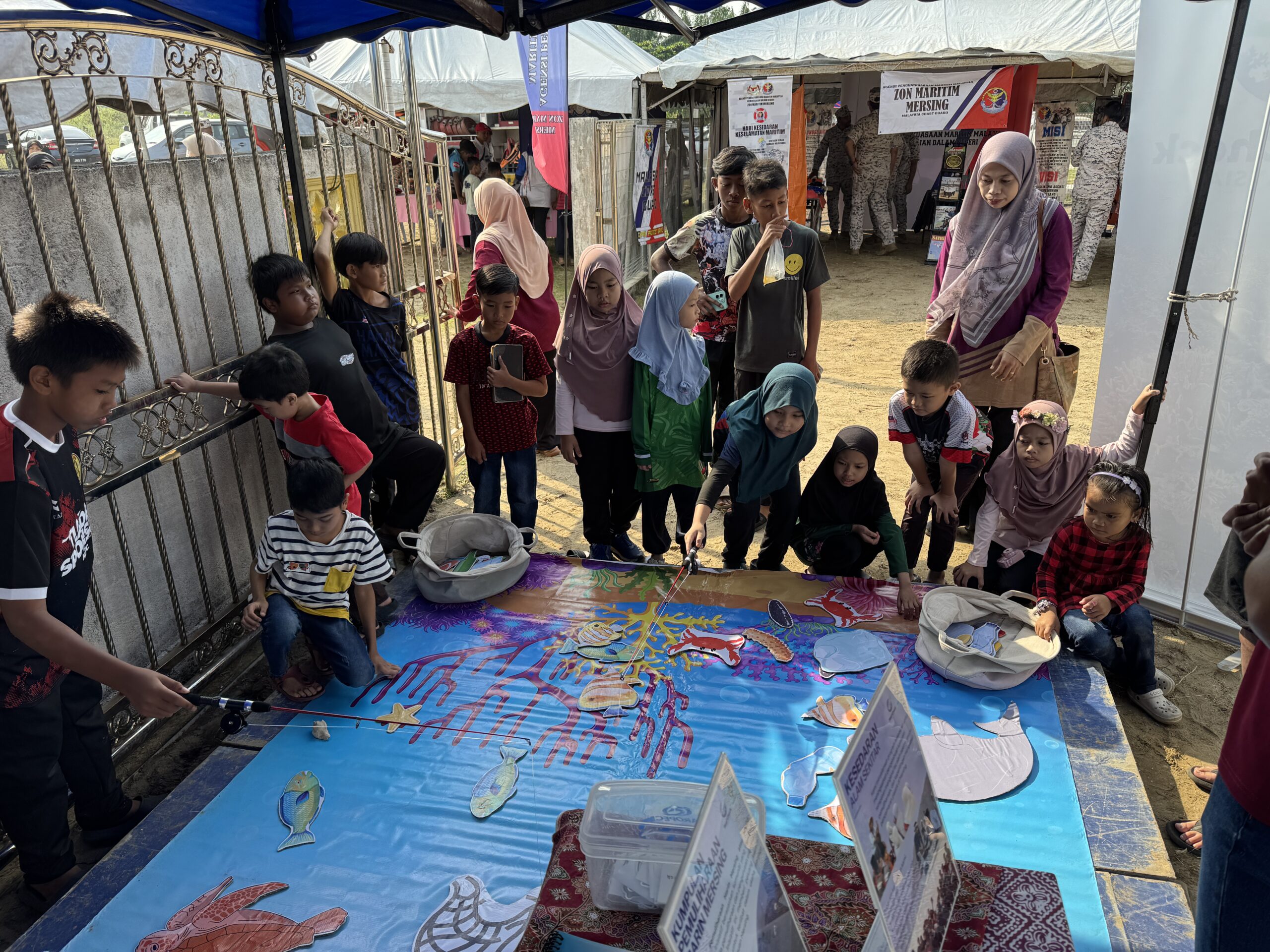
“Catch and Release” game session with Endau community members
Participants during the “Blindfold Recycling” game
Keeping Mersing’s Reef Safe
A certified Green Fins Assessor evaluated dive operators in the Mersing Islands against the 15-point Green Fins Code of Conduct. Two operators earned Silver Membership status for 2025, recognising their commitment to sustainable diving and coral reef protection.
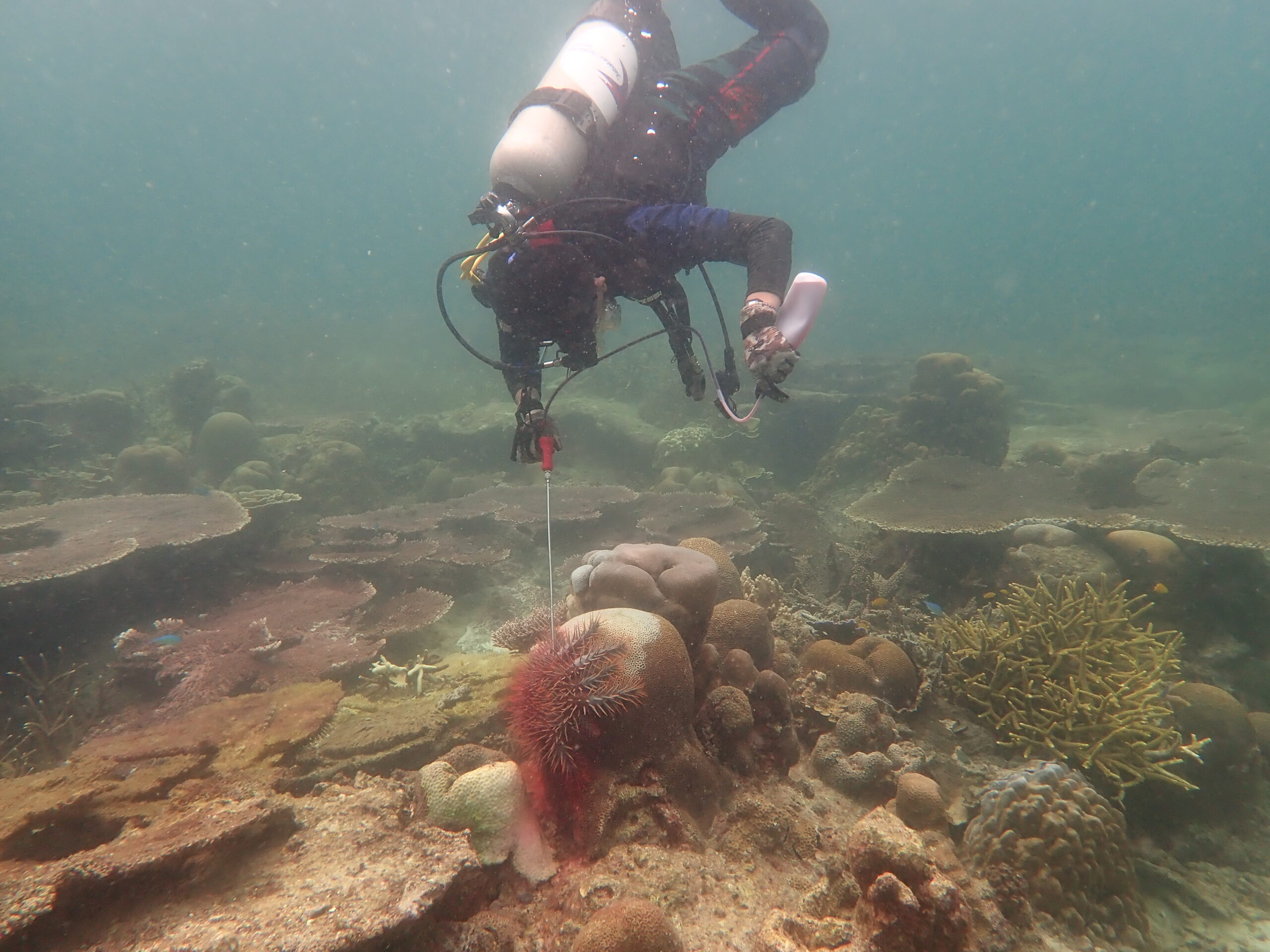
Between July to September, our team successfully conducted eight underwater clean-up activities at Pulau Aur, Pulau Dayang, Pulau Gual and Pulau Harimau. A total of 159.2kg of ghost nets and marine debris were removed, while 47 Crown-of-thorns starfish were culled using vinegar injections to protect the marine ecosystem. This initiative was made possible through the support of the Department of Fisheries Malaysia (DoF), along with the dedicated members of the Mersing Marine Conservation Group (MMCG) and Tengah Island Conservation (TIC).
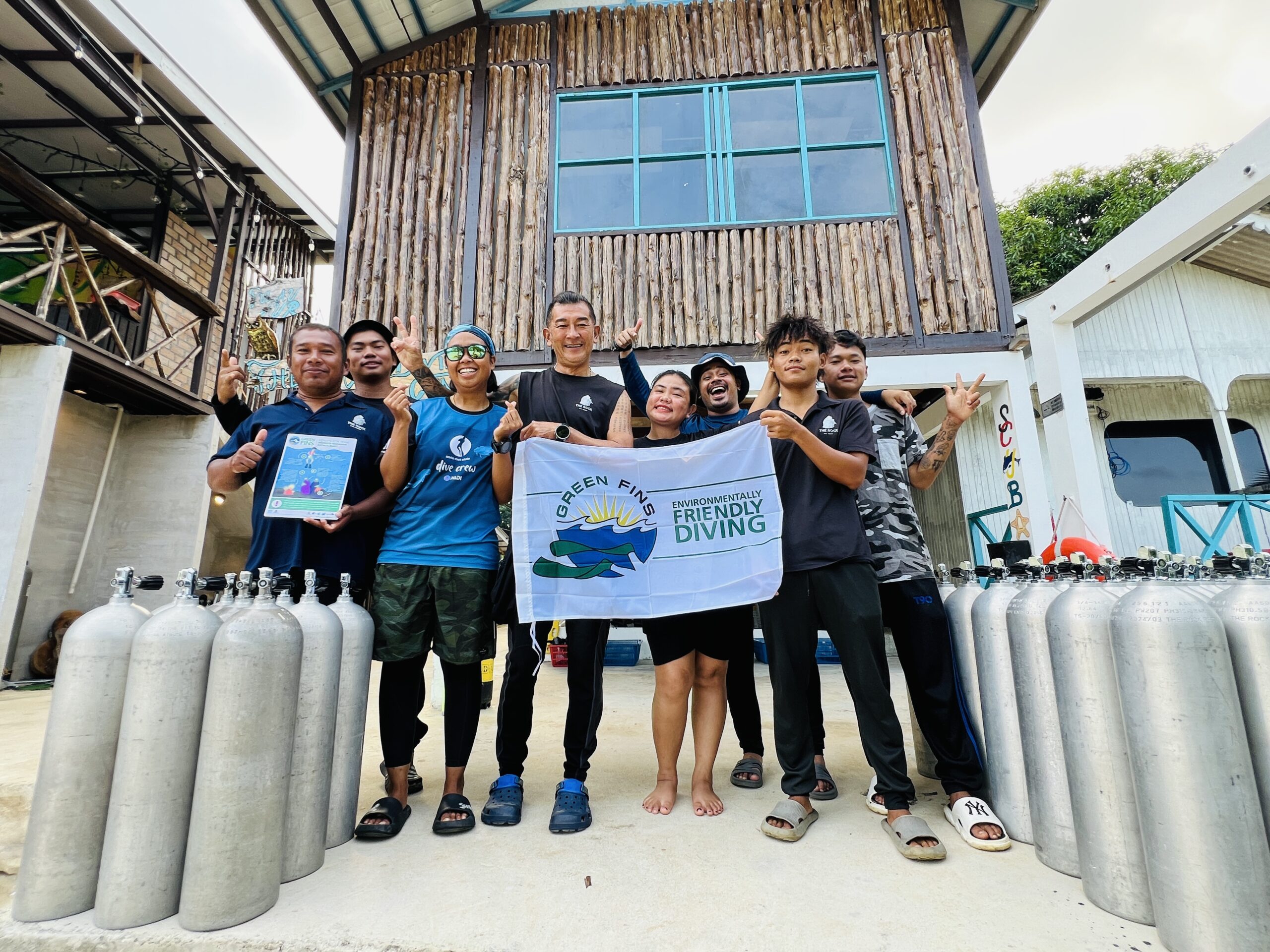
Green Fins Assessment with Aqua Dive Sport
A diver injecting crown-of-thorns starfish with vinegar
Checkout these stories
Climate change is real and it’s happening – right outside our front door
In recent articles, we have talked about the importance of three inter-locking themes in marine conservation:Resilience: building the natural capacity of coral reefs to resist or recover from external disturbances, specifically climate changeLivelihoods: sustainable,...
Cintai Mantanani : July-September 2021 News
Cintai Mantanani is a long-term effort by Reef Check Malaysia which strives to ensure the economic well-being of the community while protecting our marine environment. Currently, we have a team of three based on Mantanani Island running the projects on the ground...
Cintai Tioman : July-September 2021 News
Cintai Tioman is a 10-year old programme designed to enhance the resilience of coral reefs and social resilience of the community on Pulau Tioman. Reef Check Malaysia, with the help of Yayasan Sime Darby as sponsor, aims to meet several objectives through the...