
Cintai Tioman Updates:
January – March 2026
Building Community Awareness
This quarter, we worked with both students and community members to build a better understanding of marine ecosystems and what it means to protect them. In our session with students from SMK Tekek’s Kelab Pencinta Alam, learning happened out in the field. From observing marine life at the marina to trying out microplastic sampling, it helped the students connect what they learnt in class to what’s actually happening in the ocean.
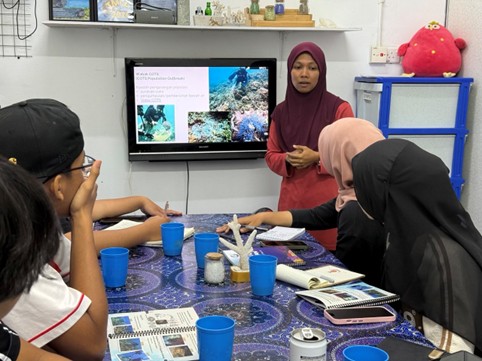
Meanwhile, members of the Tioman Marine Conservation Group (TMCG) took part in sessions on marine ecology and hands-on training, including how to safely remove ghost nets and understand their impact on reefs. Our aim was to increase their understanding of the marine ecosystem, particularly the important role that coral reefs play in supporting marine biodiversity and the local communities.
Together, these efforts are about building a stronger, more informed community.
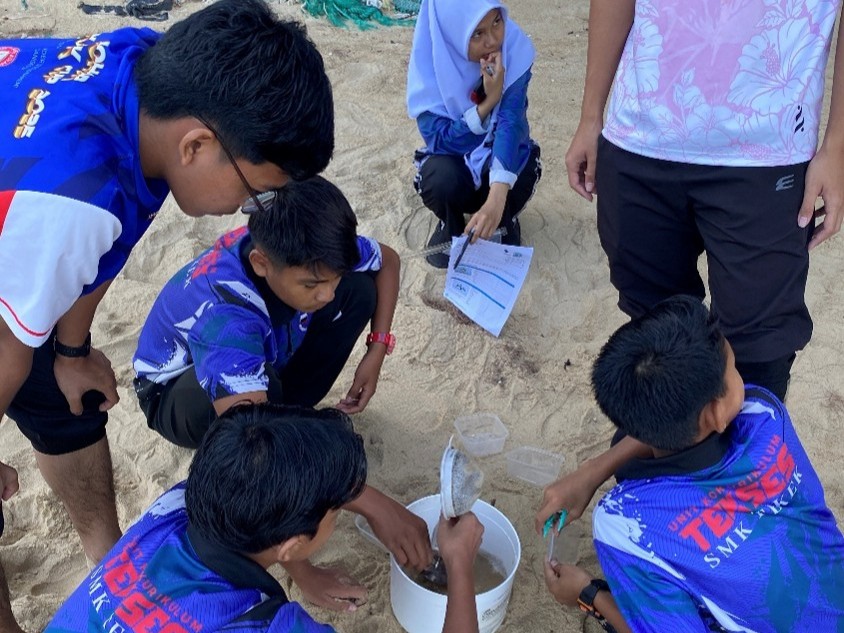
Microplastic sampling activity
Classroom session on Coral Reef Ecology
Improving Water Access on the Island
On Pulau Tioman, access to reliable water is becoming more important especially with changing weather and supply disruptions. Recently, 18 water tanks were distributed across four villages (Kampung Tekek, Salang, Air Batang and Genting) to help communities store water more effectively.
With better storage, communities are more prepared during dry periods and less vulnerable to sudden shortages. This is also a step toward more sustainable water use on the island to support long-term resilience for the local communities.
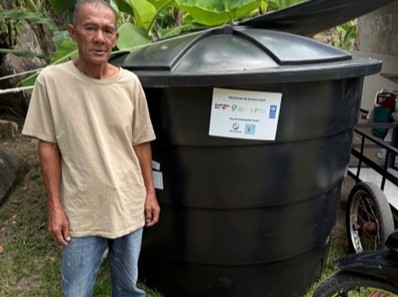
A resident with the water tank received
Day-to-day Conservation on the Island
In the first few months of the year, teams removed 3,000 kg of ghost nets from around Pulau Soyak and Pulau Tomok. These abandoned nets can keep trapping marine life long after they’re lost, so removing them is an ongoing effort that relies heavily on local partners, dive operators, and the community.
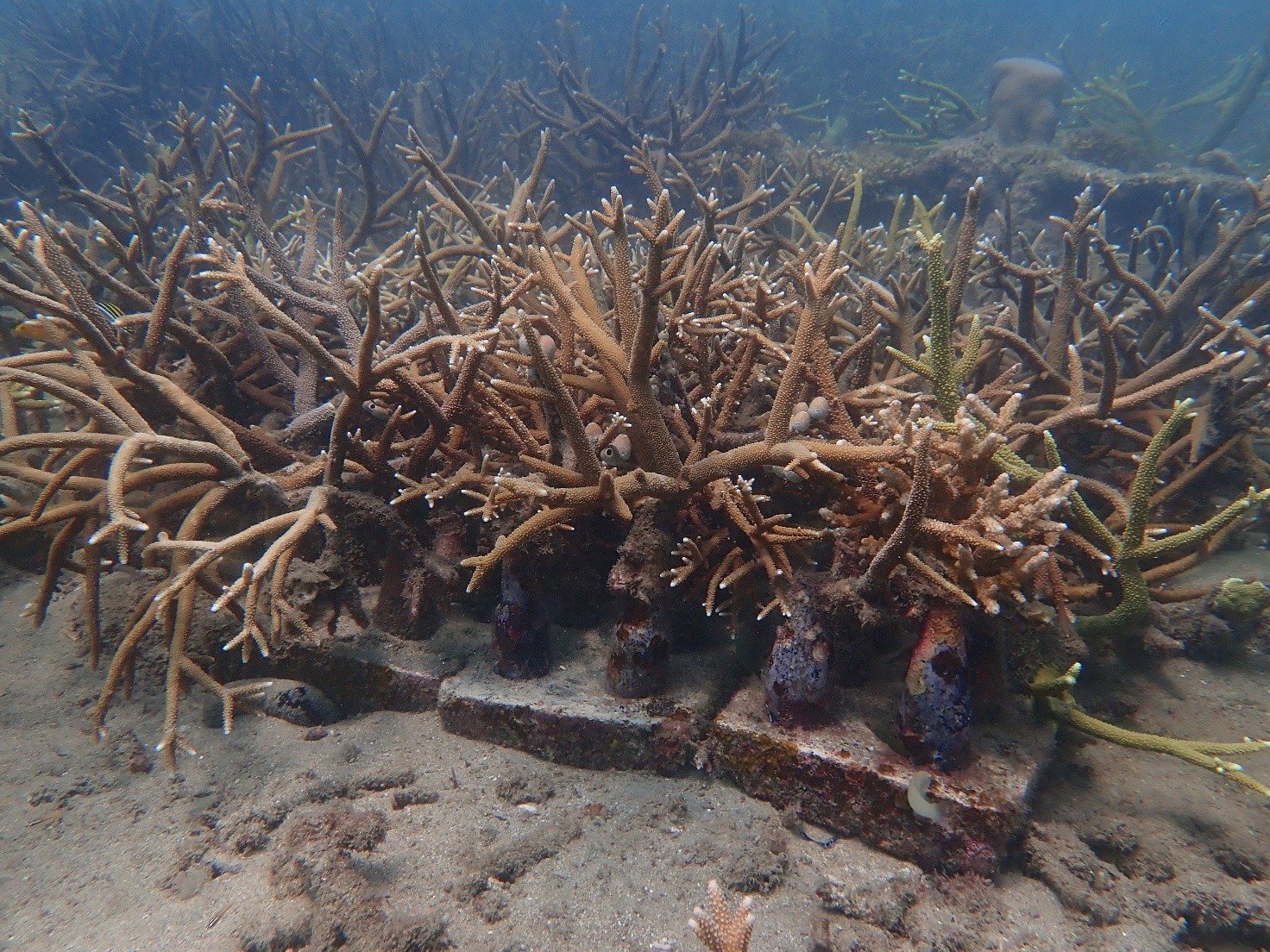
Meanwhile, reef restoration work continues across the island. 148 new blocks were added across eight sites, along with 10 frame bars to strengthen existing structures. Regular cleaning by the Tioman Marine Conservation Group (TMCG) also helps give corals a better chance to grow without being overtaken by algae. How are these coral blocks made? At Rumah Hijau, sorting and recycling of waste takes place to support reef restoration. Here, used glass bottles are cleaned and repurposed into coral pots which are populated with coral nubbins at our reef rehabilitation sites.
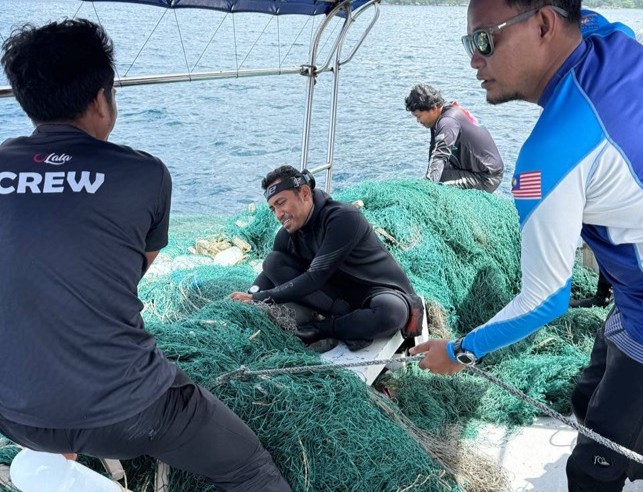
TMCG members with a local dive centre removing one of the nets
One of the rehabilitation sites
Checkout these stories
East Malaysia Happenings: April – June 2023
Cintai Mantanani The waste management programme introduced a couple of years ago has developed very well, with amazing reception from the local community. In mid-May, all wastes weighing around 455.8 kg (except for food waste) were transported out to the mainland....
Cintai Redang: April – June 2023
The 6 local youths who are members of the Redang Marine Conservation Group (RMCG) were recently trained as Open-Water (OA) divers. This dive course was sponsored by RCM, as the team will be busy with many dive-related day-to-day tasks. We will slowly be equipping the...
Nuance or Sledgehammer: What’s the Best Communication Technique?
It’s not often that epistemology, empiricism and the use and descriptions of words, and how they are used, creeps into my pieces. But today it did. A little.I was reading this piece in the Guardian while sipping my morning tea:The headline for the article reads: As...