
South of Johor:
July – September 2025
Stakeholder Engagement Meetings
Reef Check Malaysia (RCM) held three stakeholder meetings with local schools and the Majlis Perbandaran Pengerang (MPP) to plan future conservation activities. Teachers from SMK Pengerang Utama and SK Kampung Baru Pasir Gogok expressed strong enthusiasm for 2025 awareness programs, supported by guidance from the Kota Tinggi District Education Office on effective school outreach.
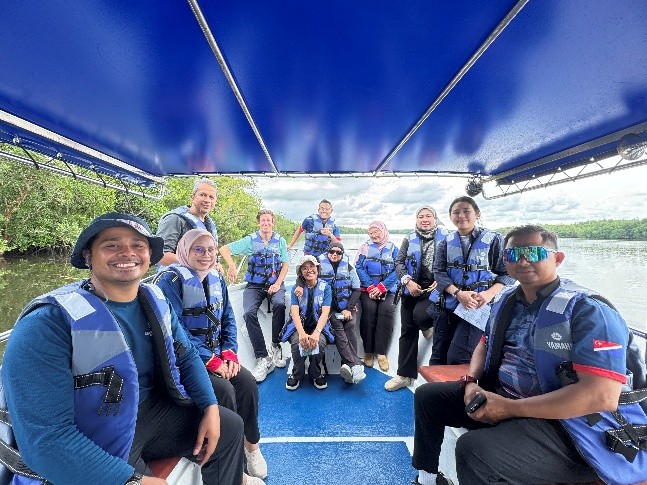
Meanwhile, during the meeting with Majlis Perbandaran Pengerang (MPP), we organised a boat excursion at Pasir Gogok, joined by YDP En. Norazmi bin Haji Amir Hamzah, who expressed strong support for protecting mangroves and seagrass in Pengerang. The trip along Sungai Santi and Sungai Lepau allowed participants to observe seagrass, seaweed, mangrove propagules, and local livelihoods such as fishing and aquaculture—highlighting the link between communities and healthy ecosystems. The event strengthened partnerships and encouraged dialogue on sustainable coastal management.
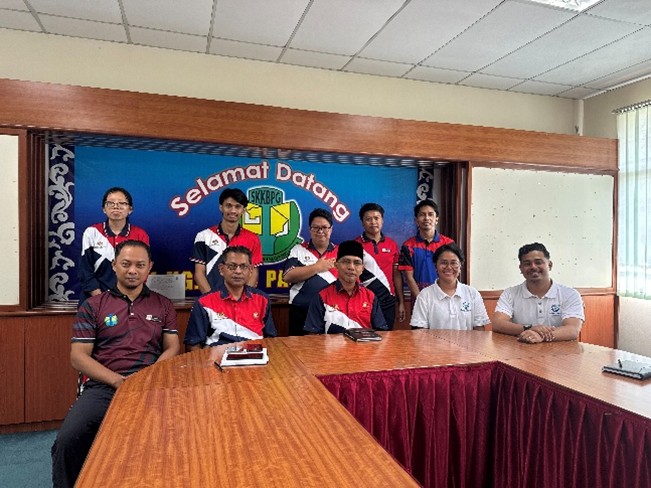
Meeting with representative from SK Kg. Baru Pasir Gogok with Kota Tinggi District Education Office
Boat excursion and stakeholder consultation session with MPP and PITSB
Kicking-off School Awareness Programs
Our colleagues conducted an awareness session with 129 students from SMK Pengerang Utama, introducing coral reefs, mangroves, and seagrass through interactive demonstrations. Fifty students later joined us in the International Coastal Cleanup (second session) with teachers and PITSB volunteers, collecting 430 kg of marine debris (4,571 items). As a follow-up, students will repurpose some of the waste to create a marine debris replica, turning cleanup efforts into a creative learning project.
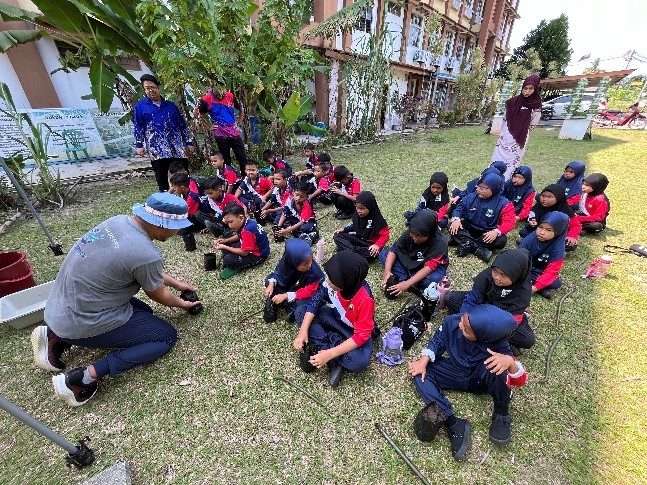
In our first session with SK Kampung Baru Pasir Gogok, we were joined by 68 students. We introduced the issue of marine debris alongside coral reefs, mangroves, and seagrass through an engaging Yes/No quiz. In Session 2, 31 students and 2 teachers, with support from a PITSB volunteer, established a mangrove nursery, planting 50 propagules. These seedlings will be nurtured for several months before being transplanted along the coastline, allowing students to actively contribute to mangrove restoration.
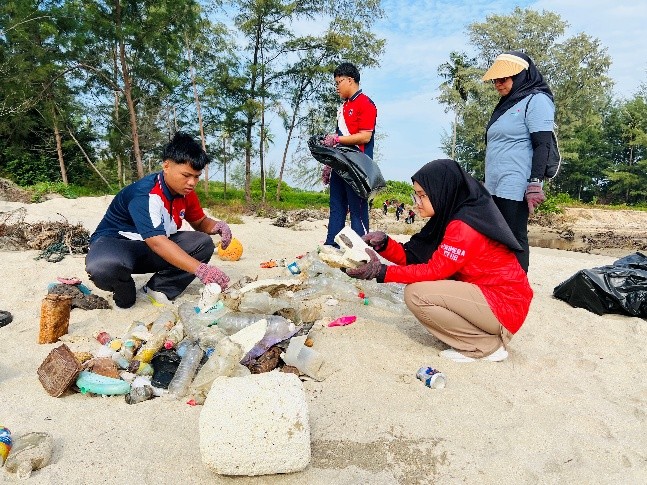
Students sorting out rubbish collected during the beach clean-up
Mangrove propagule planting session with students from SK Kampung Baru Pasir Gogok
Checkout these stories
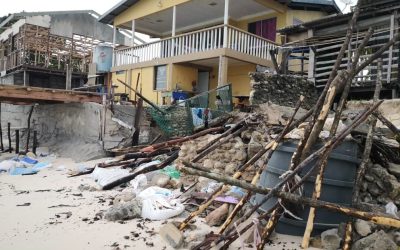
Climate change is real and it’s happening – right outside our front door
In recent articles, we have talked about the importance of three inter-locking themes in marine conservation:Resilience: building the natural capacity of coral reefs to resist or recover from external disturbances, specifically climate changeLivelihoods: sustainable,...
Cintai Mantanani : July-September 2021 News
Cintai Mantanani is a long-term effort by Reef Check Malaysia which strives to ensure the economic well-being of the community while protecting our marine environment. Currently, we have a team of three based on Mantanani Island running the projects on the ground...
Cintai Tioman : July-September 2021 News
Cintai Tioman is a 10-year old programme designed to enhance the resilience of coral reefs and social resilience of the community on Pulau Tioman. Reef Check Malaysia, with the help of Yayasan Sime Darby as sponsor, aims to meet several objectives through the...