Looks Like Coral Bleaching’s Happening Again
Remember 2024? I know, it seems like such a long time ago…but it’s only 2 years ago, and a lot has happened since then…(no, I’m not referring to Trump…!!)
2024 was declared by marine scientists as the fourth global coral bleaching event. Caused by warming oceans, bleaching is a stress response that causes corals to expel microscopic algae that live in their tissues, causing them to lose their colour (hence the term “bleached”) – but also their food source (there’s a simple explanation of bleaching here). Data from our own monitoring show that bleaching impacted nearly 90%of coral reef locations surveyed in Malaysia. A separate study suggested that average coral morality in Malaysia was 34%.
Déjà Vu for Coral Reefs
Just recently, NOAA issued a bleaching watch alert for Terengganubleaching watch alert for Terengganu, suggesting that again sea surface temperatures are rising, a possible precursor to another bleaching event.
The graphic is from NOAA, and it shows areas of elevated sea surface temperature. Note that the west coast of Peninsular Malaysia, and South Sabah (along with most of South East Asia!!) show large areas of higher temperatures – in yellow. The latest alert now includes the East coast.
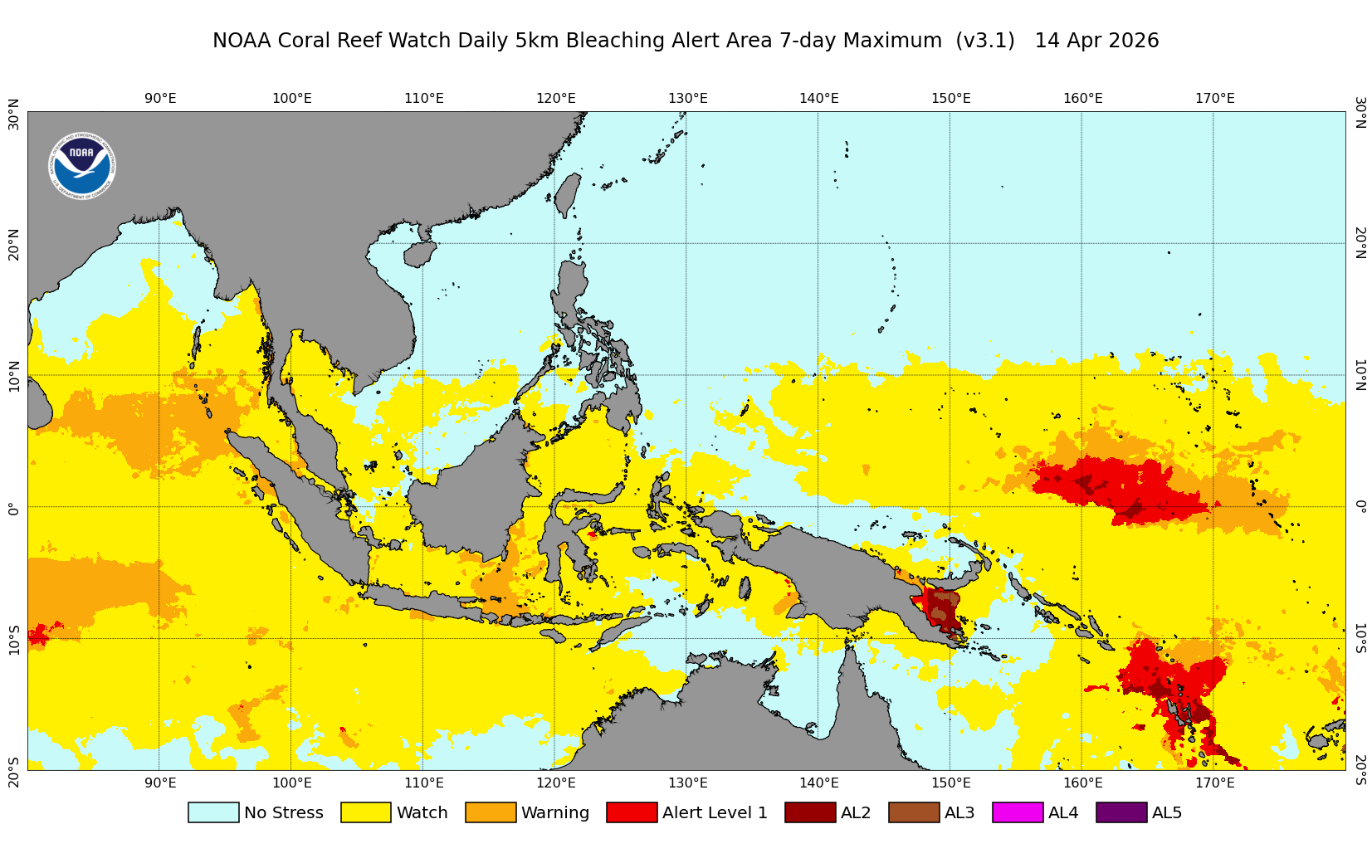
NOAA bleaching watch alert for Terengganu
So, We Should…
Panic? Not yet. It’s only one warning, and as they say, “one swallow does not a summer make”.
Be concerned? Yes.
Because forecasts from the same source indicate that over the next few months, there could be another extended period of ocean warming, similar to what we saw in 2024, which could lead to another mass bleaching event.
This is important because corals and coral reefs take some time to recover from a widespread bleaching event such as we saw in 2024. They have barely recovered…and here we are smacking them around the head again – it’s like kicking a man when he is down…not sporting.
And likely to lead to more widespread damage to coral reefs which – lest we forget – are important for food security and livelihoods.
An Appropriate Response to Bleaching Warning
Here’s the problem: once bleaching has started there is very little we can do about it. The “marine heat wave” is already baked in (pardon the pun); it’s very likely to happen, nothing we can do to stop it.
What we should have done is start to identify all the little things that are harming reefs on a local basis – sewage pollution, coastal development, physical impacts…and work to reduce the harm. It’s called building resilience – that natural characteristic of ecosystems that describes their ability to recover from external shocks.
So, here’s the good news, because some of that has been done. The Marine Parks managed by Department of Fisheries in Peninsular Malaysia, and by Sabah Parks and Sarawak Forestry Corporation in East Malaysia, are a good start.
Dive centres joining programmes like Green Fins is another good response. And our own Community Marine Conservation Groups (CMCGs), which are building local capacity in marine conservation, are all part of a comprehensive response.
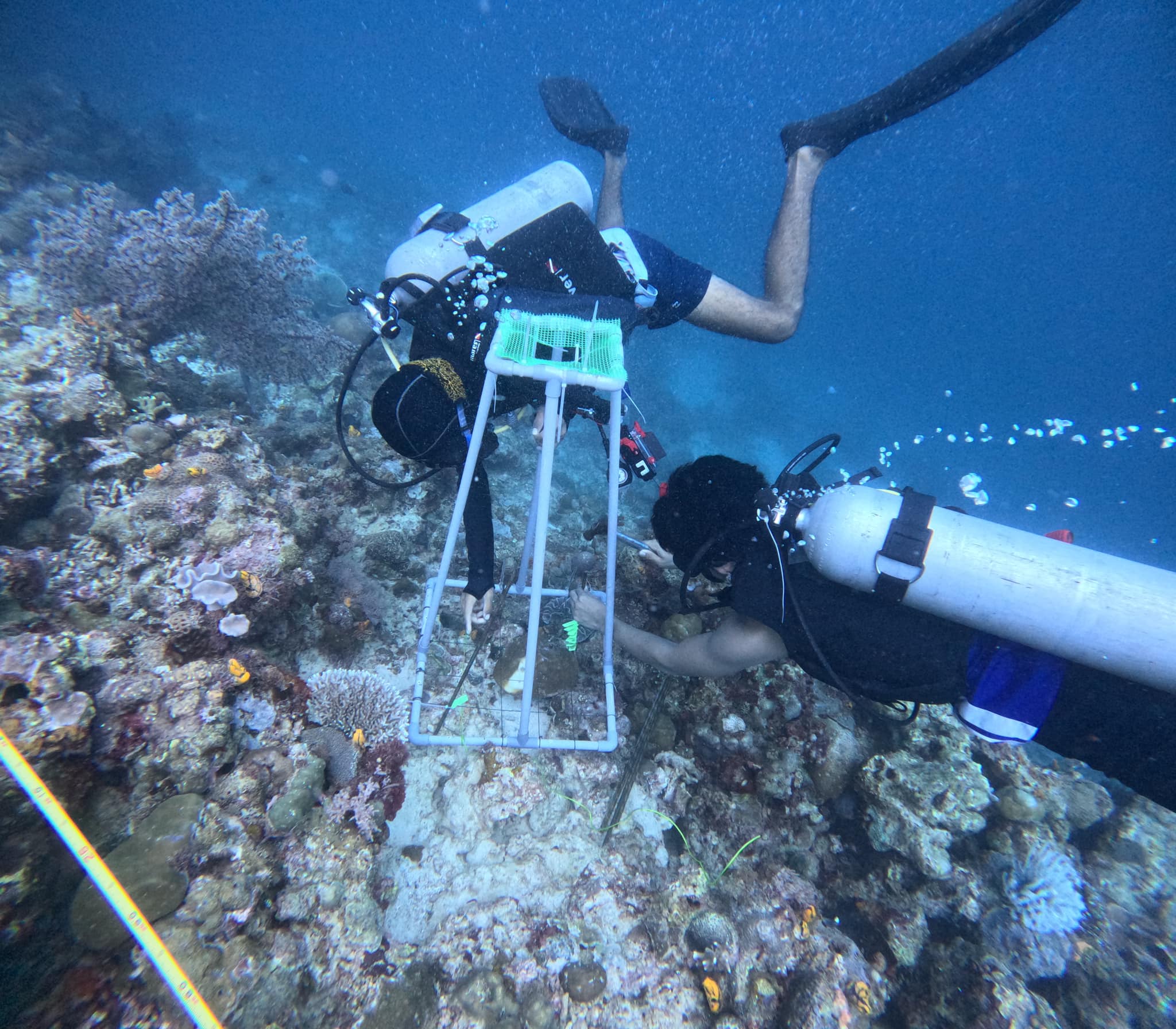
Coral bleaching monitoring done by our CMCG following our Bleaching Response Plan
More Can Be Done To Manage Future Bleaching Events
We’ve even established a coral bleaching response plan to help manage future bleaching events. But we need to do more than just react to bleaching. We need to look at all those things affecting coral reefs and work out how to reduce the negative impacts, so, back to reef resilience.
I guess you could say that right now, an appropriate response/plan would be:
- Manage while it’s happening: work with all relevant stakeholders on the ground to minimise the impact of day to day activities – give reefs some breathing space to deal with this anticipated impact. This could involve coral predator removal, conducting cleanups, reducing physical activity at coral reefs, perhaps closing some sites off from tourism. Small steps, but better than nothing. We have developed Bleaching Response Plans for islands to help guide this process.
- Plan for the future: this bleaching event will come to an end. Maybe some corals will die, but, we need to improve protection – again, back to resilience.
Three Things to Address for Reef Resilience
Three things need to be addressed: physical impacts, herbivores, and water quality, and add tourism as part of the mix in all three.
The first we can address by working with tourism operators to reduce the direct physical impacts from tourism. Simple.
The second, through strengthening fishing regulations; also not too difficult.
It’s the third area that needs action, and let’s be honest it is a complex issue. Water quality can be affected by many things – sewage pollution, agricultural run-off and coastal development to name a few.
One of the more immediate needs, particularly in coastal areas, is to improve sewage treatment. We were recently invited to participate in a meeting with Department of Environment to discuss this, and once again the complex governance of Malaysia’s natural resources provides a challenge to navigate!! But we have some movement, and we need to build on that.
For now, let’s keep our fingers crossed that the bleaching isn’t too bad. But let’s also take this warning as a “call to action”: we need to build resilience by addressing the local threats to coral reefs.
The science is clear; we need to take action.
_______________________________________________________________________________________________________________
If you’d like to support us, you can follow our social media pages for any updates on our work and volunteering opportunities, or you could also donate towards our cause.