Policy and Advocacy Progress:
January – March 2026
Plastics Policy and Action
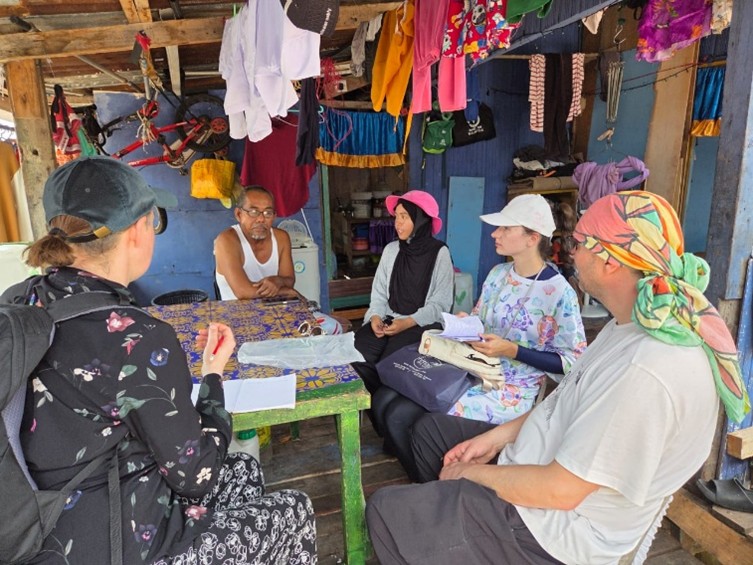
From January to March 2026, Reef Check Malaysia worked with the Swiss Federal Institute of Aquatic Science and Technology (Eawag) and the University of Bern to better understand how plastic policies can be implemented more effectively on the ground. Through a stakeholder workshop in Semporna, Sabah, we engaged government agencies, businesses, civil society, and local Sea Gypsy communities to explore real-world challenges, from policy gaps to practical barriers in enforcement.
As countries move toward a global UN Plastics Treaty, this work highlights a key need: policies must reflect on-the-ground realities to succeed. Insights from this project will contribute to:
- Assessing countries’ positions on the treaty
- Developing a Plastic Pollution and Policy Performance (4P) Index
- Identifying barriers faced by governments
By bridging policy and practice, this initiative aims to support more practical and inclusive solutions to plastic pollution.
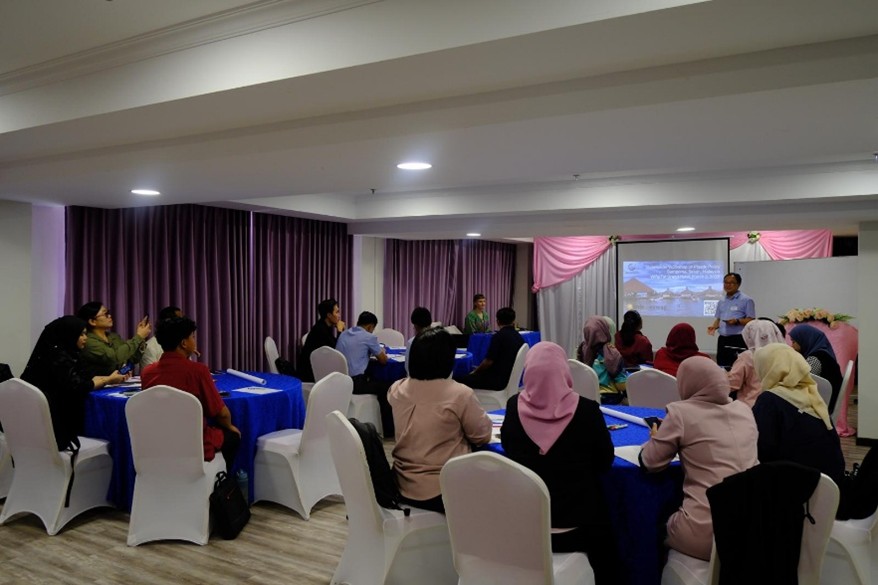
Presentation session during the Plastics workshop
Interviewing local Semporna islanders
Bringing Local Work into National Conversations
How do we make sure what’s happening on the ground actually shapes national decisions? Over the past few months, we’ve been working with partners and policymakers to bring real, on-the-ground insights into national conversations on marine conservation.
In January, we contributed to Malaysia’s 7th National Report to the Convention on Biological Diversity, sharing how local efforts, from community-led reef monitoring in Tioman to coral restoration and sustainable tourism practices, are supporting the country’s broader biodiversity goals.
We also brought our latest reef survey findings into discussions at Parliament, helping ensure that current reef conditions and challenges are part of policy conversations. During this follow-up meeting, RCM continued to advocate for the establishment of a dedicated Thematic Working Group for Coastal and Marine ecosystems under the National Policy on Biological Diversity (NPBD). As we move forward, RCM remains committed to working alongside the Special Select Committee to champion policies that protect our oceans. Together, these efforts help bridge what we see in the field with how decisions are made so that conservation is not just planned at the top, but shaped by real experiences on the ground.
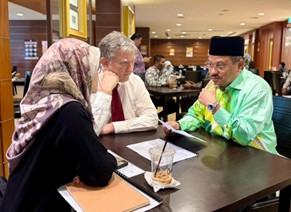
A presentation during the 7th National Report (7NR) – CBD Workshop
Jasmin and Julian from RCM (left and middle) during the meeting at the Parliament
Putting Island Communities on the Agenda
In February, we were part of discussions at Parliament around a new set of policy briefs under the All-Party Parliamentary Group Malaysia on Sustainable Development Goals (APPGM-SDG). It brought together people across different sectors to look at some of the social and environmental challenges communities are facing.
One of the key areas discussed was the wellbeing of small island communities, with a policy brief shaped around the realities of places like Mantanani. Because of our work on the island, we were able to share what we’ve been seeing on the ground, from the day-to-day challenges communities face to the kind of support that would actually make a difference. These are perspectives that don’t always make it into policy conversations, but are important to get right.
As these discussions continue, it’s encouraging to see more attention being given to coastal and island communities and we’ll keep working to make sure their experiences are part of how decisions are shaped moving forward.
Checkout these stories
From Island Communities to Global Conversations: Taking Malaysia’s Ocean Story Further
The AVPN Global Conference 2026 I’ve had the privilege of attending some very interesting conferences lately. First up was the AVPN Global Conference 2026 in New Delhi in August. For a small organisation like ours, being part of a gathering of this scale is both a...
Kota Kinabalu and Mantanani Updates: July – September 2026
Kota Kinabalu and Mantanani Updates:July-September 2026Equipping Our CMCG With New SkillsOn 20–21 July, RCM conducted a two-day training for the Mantanani Marine Conservation Group (ManMCG) covering coral bleaching monitoring, ghost nets and coral planting. The...
Cintai Tioman: July-September 2026
Cintai Tioman Updates:July-September 2026Building Local Capacity & SkillsRCM supported a one-day training led by staff from the All-Party Parliamentary Group Malaysia for Sustainable Development Goals (APPGM-SDGs), equipping local community members to become...