
Cintai Mersing Updates:
January – March 2026
Building Local Capacity
In Mersing, recent efforts have focused on building skills across both experienced guides and new community members. 21 participants took part in the Eco-Friendly Scuba Guide (EFSG) renewal programme, refreshing their understanding of marine ecosystems, park regulations, and responsible tourism practices. They also went through First Aid and CPR training, helping them be better prepared to respond to incidents out at sea.
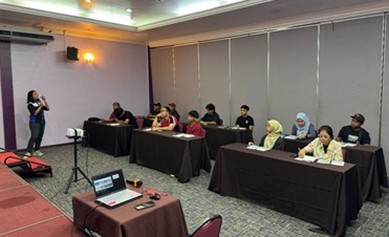
Meanwhile, 12 new members joined the Mersing Marine Conservation Group (MMCG). Through introductory sessions, they were introduced to marine ecology, conservation work, and basic monitoring methods, which gives them a starting point to get involved on the ground. Moving forward, 10 of them will be signing up for their SCUBA license, followed by field-based experience with us, building up their confidence and skills over time.
Together, these efforts are about strengthening local capacity so that the conservation work in Mersing can continue to grow and be led by the community itself.
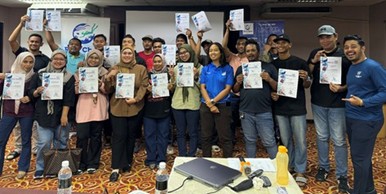
Participants who successfully competed the EFSG renewal programme
Theory class session with the potential MMCG members
Reef Health Update
The waters around Mersing continue to show both resilience and signs of pressure. 72 reef sites were monitored across the islands, through a joint effort with the Department of Fisheries (DoF), Tengah Island Conservation (TIC) and local community volunteers.
Overall, reef condition was classified as “Fair”, with a Live Coral Cover of almost 48%, down from “Good” in 2024. This decline is due to several factors, including coral bleaching, strong wave conditions as well as ongoing human impacts such as anchor damage, marine debris and ghost nets.
While these challenges are a concern, the reefs still show resilience and highlight the importance of continued monitoring, collaboration, and responsible practices moving forward.
Small Actions Along the Mersing Coast
At Pantai Bandar Mersing, 45 participants came together for a beach clean-up, collecting 566 kg of marine debris in just one session. It was a mix of everything, from plastic bottles, wrappers, fishing gear to foam. These types of waste slowly builds up and affects the coastline and the communities around it.
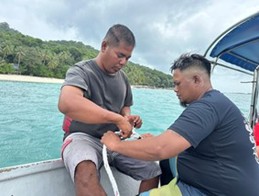
At the same time, efforts are also happening out at sea. Around Pulau Hujung, Pulau Tengah, and Pulau Besar, six mooring buoys were installed to give boats a proper place to anchor without damaging reefs and seagrass below. It’s a small change, but one that makes a real difference, especially in busy areas where repeated anchoring can take a toll on the marine ecosystems over time. Taken together, these collective efforts by several stakeholder groups are about reducing pressure on the marine environment in practical ways.
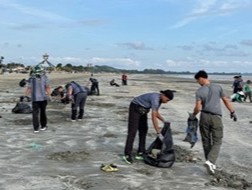
Participants collecting marine debris
Snorkelling operators assisting in installation of mooring buoys
Checkout these stories
Cintai Mersing: April – June 2024
annual Reef Check Surveys capture coral bleachingOur colleagues were joined by EcoDivers from among the local community of Sibu Island as we kicked off our annual Reef Check surveys in the Mersing Islands. Additionally, with the support from the divers from Department...

Reef Check Malaysia Empowers 10 Youths for Marine Conservation in the Mersing Islands
MERSING, 4 JULY 2024 – Reef Check Malaysia's Cintai Mersing team has embarked on an inspiring journey to train future conservation leaders among the islanders of the Mersing group of islands.This program aims to enhance the local community's capacity and skills to...

Warm seas are stressing our corals.
KUALA LUMPUR, 26 JUNE 2024: Malaysia’s coral reefs are turning white due to a phenomenon called coral bleaching, a result of their being exposed to warm water for a prolonged period. Reef Check Malaysia, a non-governmental organisation committed to healthy...