Small, remote islands around the world share the same problem: lack of effective waste management. Malaysia is no exception.
Mantanani Island, Sabah (19 July 2021)
Reef Check Malaysia (RCM) is currently working alongside partners and local communities to improve the waste management system on Mantanani Island. Located approximately 22km off the West coast of Sabah, this group of three islands has two villages on Mantanani Besar – Kampung Siring Bukit and Kampung Padang, with an estimated population of 1,000.

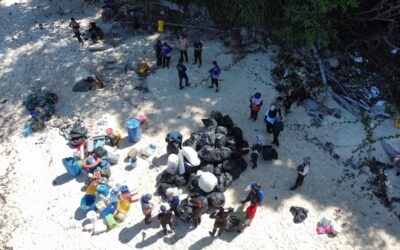
Preparing waste collected to get transported to mainland
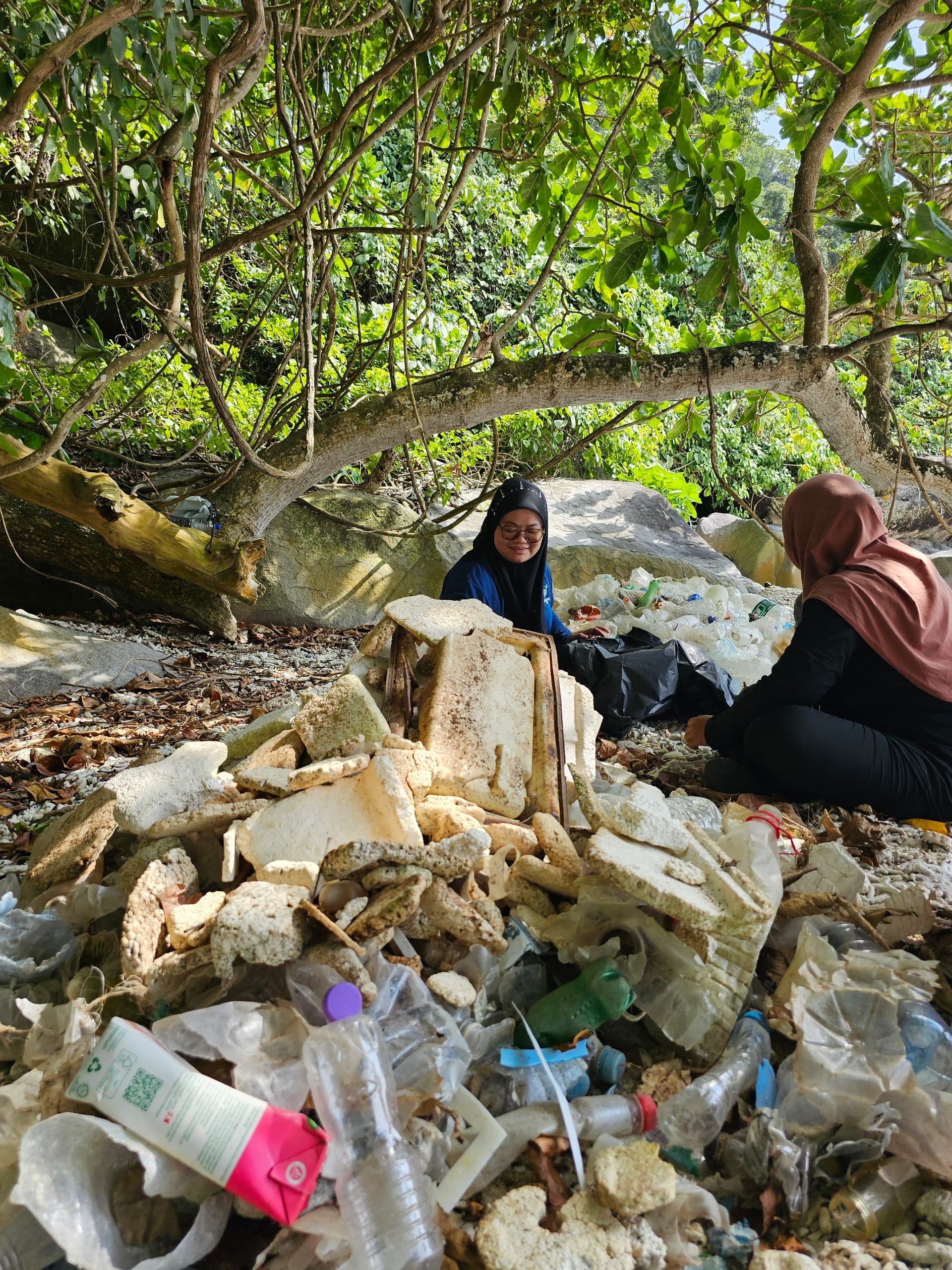
“Because of the island’s remote location, the local community has poor access to facilities” said Adzmin Fatta, RCM Programme Manager and leader of Cintai Mantanani, a programme designed to enhance the resilience of both the island’s community and coral reefs. “We only get electricity from 6pm to 6am, there is no piped water, no centralised sewage treatment, no healthcare facilities, and there was no waste management system in place.” Previously, common waste disposal practices included dumping to an open landfill on the island, open burning, burying underground, and dumping into the sea.

Daily waste collection team visiting households for waste collection
In order to address this major issue, RCM established a Waste Management Improvement Programme for the Mantanani Island community back in 2018 with 174 households now participating in the programme, serving a population of 905.
The Waste Management system was introduced in phases, starting in Kg Siring Bukit, the smaller village, and slowly being rolled out to the larger village. To begin with, participating households were taught how to segregate their waste. Then, the waste collection team, who are hired locally, would visit each house every day to collect and transport the waste to a temporary waste segregation center for data recording, sorting, and storage. Organic materials are treated or used as food for the cows on the island; non-organic waste is sent off the island to a landfill on the mainland; plastic bottles are sent to RCM’s established Mantanani Plastic Recycling Centre (MPRC), where the plastic bottles are compressed for easy transport to the mainland for recycling and plastic bottle caps are repurposed into reusable products.

Summary of waste data collection from January to June 2021
The waste management system requires significant financial support to ensure that it is consistent, organized, and effective. Adzmin continues: “We have to consider the costs that go into managing a system such as this – maintenance of buildings and equipment; labour costs, which is also a source of income for local islanders; transportation of waste to the mainland for disposal.”
To put this into perspective, in January this year, the team sent 753kg of plastic bottles to a recycling facility in Kota Kinabalu and received RM150.60 from the sale of the recyclables. But it cost RM120 for land transportation and RM900 for boat transportation alone, not including labour costs. On average, Reef Check Malaysia spends RM6,000-8,000 each month to maintain the programme.
“Before the programme, we had to throw all of our waste to the beach area. The environment was very unsightly and everyone had to clean the waste around their house every day.” said Noriazziah, a teacher from the local community. “I hope that the programme can continue as it brings positive changes to the island.”
RCM is into the third year of operating the system. Adzmin said that: “Between January and June this year alone, 35,561.9kg of waste has been collected, preventing it from entering the ocean, or being burned or buried. The waste includes food, plastics, plastic bottles, glass, tin, and miscellaneous items. With a workforce of 10 and 905 participants from the community, this is a major achievement”.


Transportation methods of waste from island to mainland
“Collaboration between government agencies, tour operators and the local community is crucial to ensure the waste management system is successful in the long-term” said Julian Hyde, the General Manager of Reef Check Malaysia.
The programme started in 2018 with funding from Yayasan Hasanah and, later, the UNDP-GEF Small Grants Programme (SGP). Currently, the Coca-Cola Foundation is supporting the waste management programme, providing funding until October this year. RCM is working with Kota Belud District Council and the Ministry of Housing and Local Government to secure long-term financial support, as well as additional equipment, for the waste management programme. For now, RCM will continue funding the programme, to provide this essential service to the community.
“If a small NGO like Reef Check Malaysia, together with the local community, can do it, it shows that this approach works and can be replicated on other islands” says Hyde.
Mantanani Island is just one of many islands in Malaysia that face this issue. Without long-term support for proper waste management, the beautiful coastal villages of Malaysia will be surrounded by waste on land and sea, creating unimaginable impacts to both communities and marine ecosystems.
###
About Reef Check Malaysia
Reef Check Malaysia (RCM) is part of the world-wide Reef Check network. Registered in Malaysia in 2007 as an NGO, RCM’s early work was focused on coral reef monitoring and island based educational programs. Today, RCM monitors over 200 coral reefs annually around the country and is actively involved in reef management and conservation efforts. Follow us on Facebook, Instagram, Twitter, LinkedIn, and YouTube.