
Semporna Updates: April – June 2026
Pioneering Seaweed Restoration
A community-led conservation group from Pulau Selakan is playing a key role in Malaysia’s first tropical eucheumatoid seaweed restoration project, led by Universiti Malaya in collaboration with Reef Check Malaysia, Sabah Parks and local partners. The project aims to restore wild seaweed populations and strengthen the resilience of marine ecosystems. But just as importantly, it highlights how local communities are becoming trusted partners in scientific research. Members of the Selakan Marine Conservation Group are working alongside researchers throughout the restoration process, bringing valuable local knowledge and experience to the project.
It’s a powerful example of how conservation works best when science and communities grow together.
Developing Community Protocols
Over the past few months, Reef Check Malaysia has been supporting the Jawatankuasa Protokol Komuniti Pulau Larapan (JPKPL) as the community develops its Community Protocol and strengthens local governance for managing marine and coastal resources.
Through community engagement sessions, participatory workshops and mapping exercises, villagers documented traditional knowledge, identified conservation priorities, and refined the protocol to reflect their needs and aspirations. The process also helped establish a clear governance structure for JPKPL, with elected committee members and dedicated teams to lead areas such as marine resource management, community development and tourism.
By putting local knowledge and leadership at the centre of the process, Pulau Larapan is building a stronger foundation for community-led conservation and the sustainable management of its natural resources.
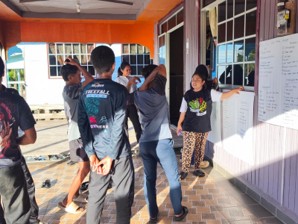
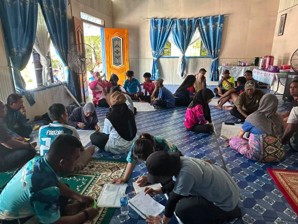
Empowering Kunak’s Youth
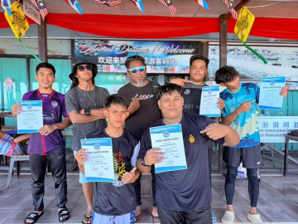
RCM has taken the first steps towards establishing the Kunak Darvel Marine Conservation Group (KDMCG), bringing together local youths to learn about marine conservation and community leadership. Guided by members of the Selakan Marine Conservation Group (SMCG), participants took part in awareness sessions, resource mapping, a coastal cleanup and collected marine debris while learning how to record data using the Clean Swell app. Building on this momentum, five participants went on to earn their Open Water Diver certification, equipping them with the skills to support future reef monitoring and restoration efforts.
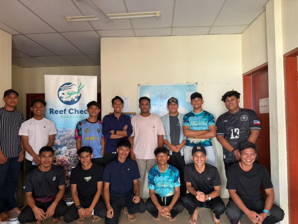
The youth members of the new KDMCG
The newly certified Open Water Divers
Checkout these stories
Would re-energising economies for a post-Covid-19 world mean rolling back on environmental protections on a rapidly changing ocean?
PART 1: SETTING THE SCENE
The Covid-19 pandemic changed almost everything. However, it has shown that large-scale urgent change is possible. The unprecedented level and speed of policy and legislative actions demonstrated our capacity to adapt in the face of profound suffering and loss to our health, livelihoods, economies, and behaviours.

Why Malaysia’s New National Tourism Strategy is a Milestone for the Economy and Conservation
Reef Check Malaysia (RCM) has long been an advocate for a more inclusive, sustainable marine tourism industry in Malaysia, and as such we are pleased to express our strong support for the new National Tourism Policy, announced recently by the Prime Minister.
…it’s how we do tourism that is important.
Balancing Economic Benefits and Environmental Damage: The case for Eco-Tourism in Malaysia
Tourism is a key industry in Malaysia, accounting for some 15% of GDP. Statistics published by the Ministry of Tourism and Culture (MOTAC) suggest that nearly 26 million tourists visited Malaysia in 2018, bringing in receipts of some RM 84 billion.
But while tourism is undoubtedly good for the nation’s pocket, the same cannot always be said of its impact on the nation’s ecosystems. There are different types of tourism, which can cause both positive and negative impacts on the environment.