South of Johor Updates:
July-September 2026
Advancing Local Skills
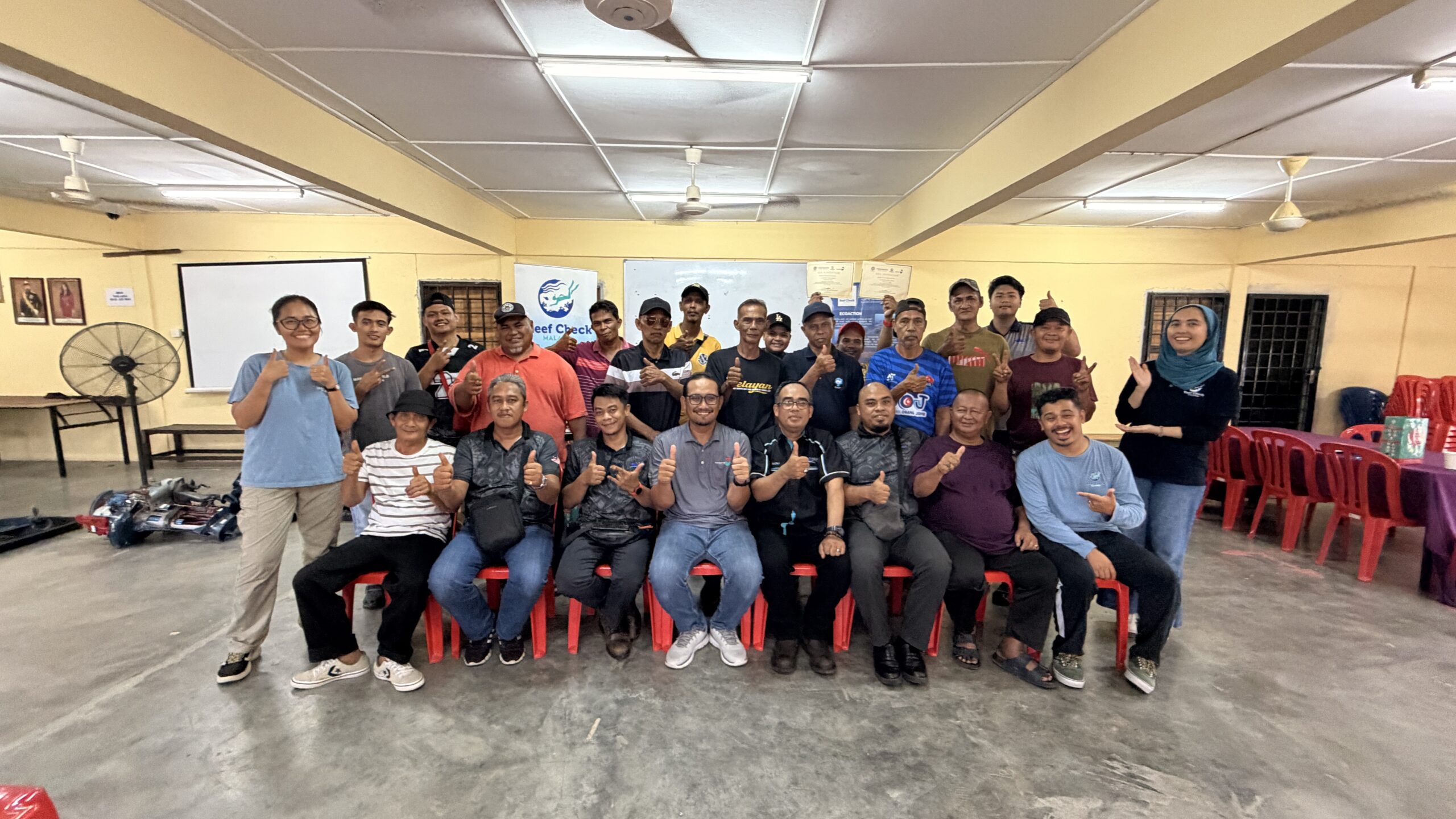
In July, Reef Check Malaysia partnered with TVET MARA Johor Bahru for the second Boat Engine Maintenance and Servicing Training in Kampung Pasir Gogok, with 15 local fishermen and boat operators taking part. Through a mix of classroom learning and hands-on practice, participants strengthened their skills in maintaining and servicing boat engines, helping support safer, more efficient fishing operations and reduce avoidable repair costs.
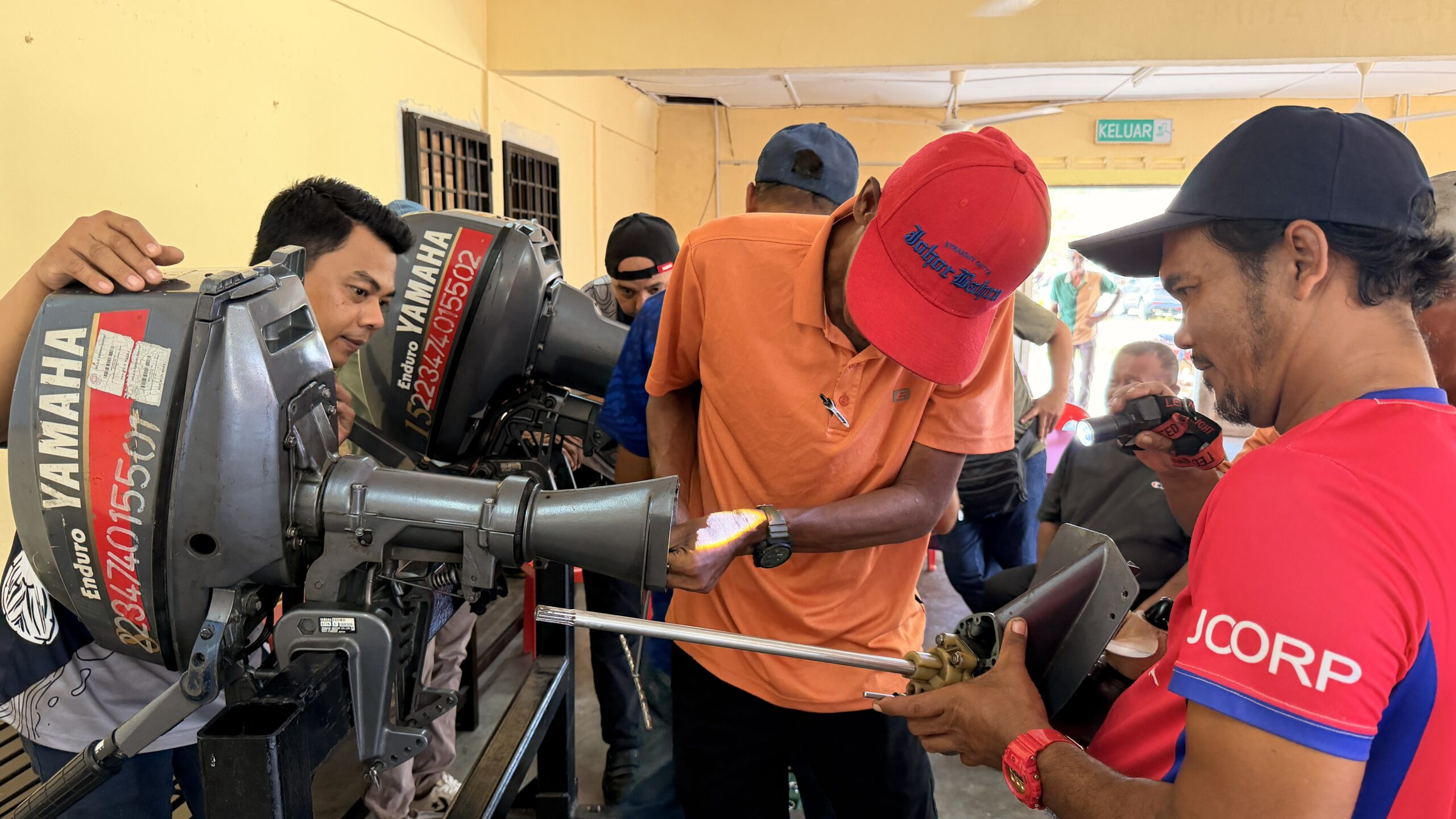
Practical session during the training
Encouraging Local Participation in Mangrove Conservation
RCM brought mangrove learning closer to the community through the Kenali Ekosistem Hutan Paya Bakau workshop, engaging 20 community members from Kampung Pasir Gogok. Participants learned to identify local mangrove species while sharing their experiences and ideas for sustainable conservation.
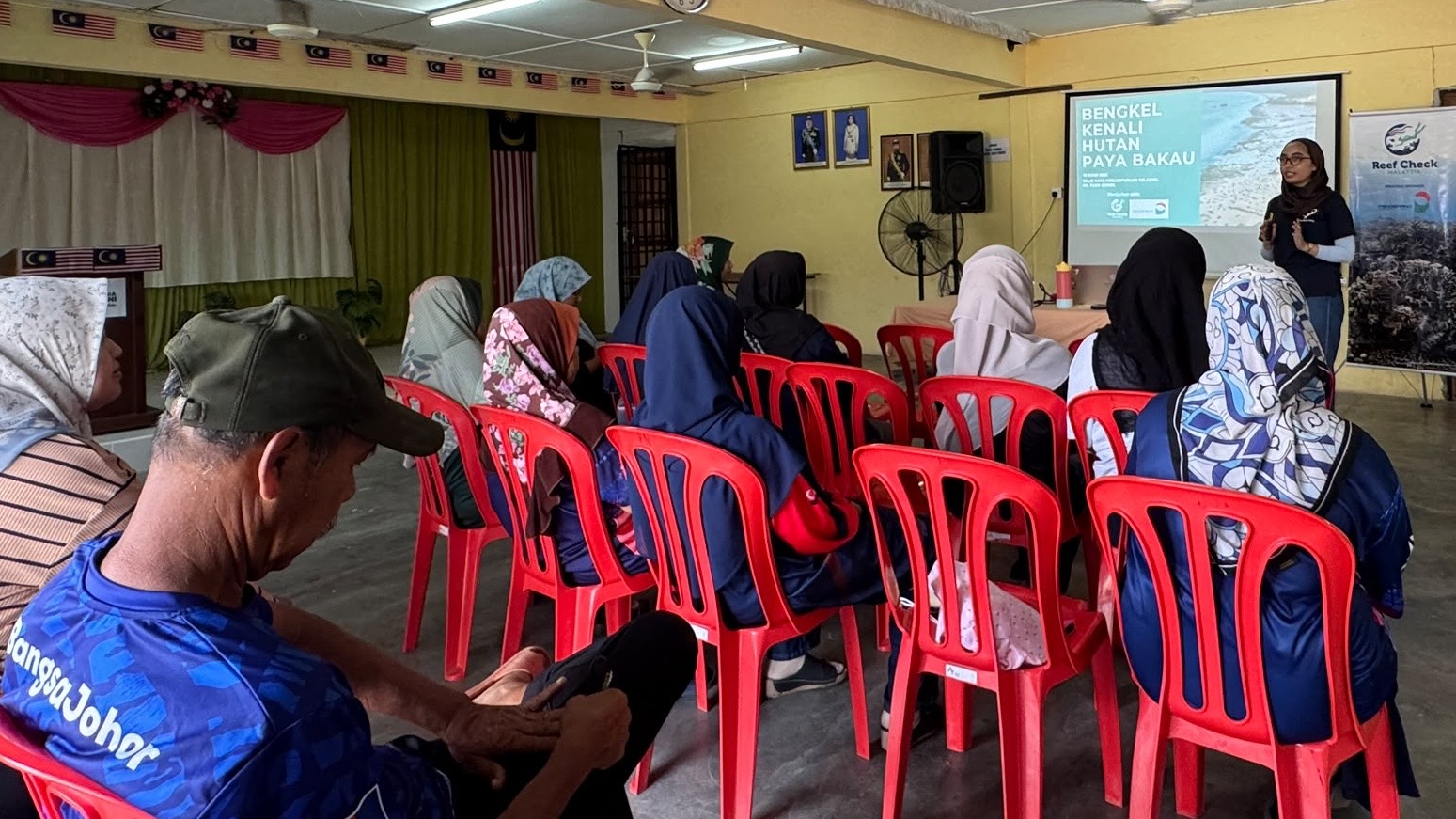
A workshop session before the planting activity
The session included a hands-on planting activity, where participants added seedlings and propagules of four mangrove species: Avicennia marina, Bruguiera gymnorhiza, B. cylindrica and Rhizophora mucronata to the community nursery. They also explored mangrove roots and checked on previously planted seedlings, with new leaf growth already visible. By combining local knowledge with hands-on action, the programme encourages greater community involvement in caring for their local mangrove ecosystems.
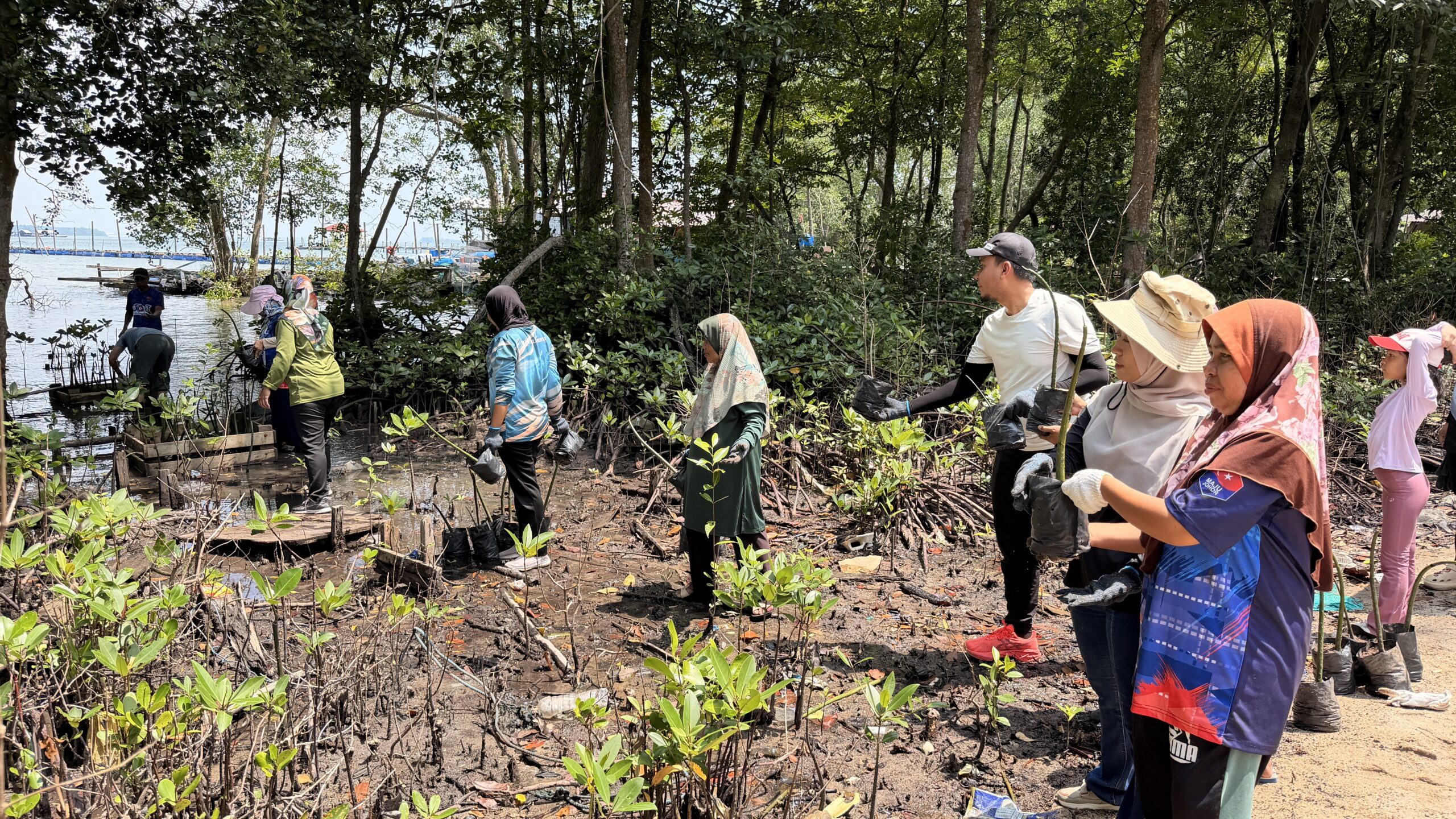
Local community members planting mangrove propagules
Building Knowledge Among Students
- SMK Tanjung Datuk
Thirty-five Form 4 students explored the importance and threats facing coral reefs, mangroves and seagrass meadows through RCM’s CEPA programme. They then put their knowledge into action through a Mini Grant Competition, developing their own ideas for marine conservation, environmental awareness and sustainable practices in their school.
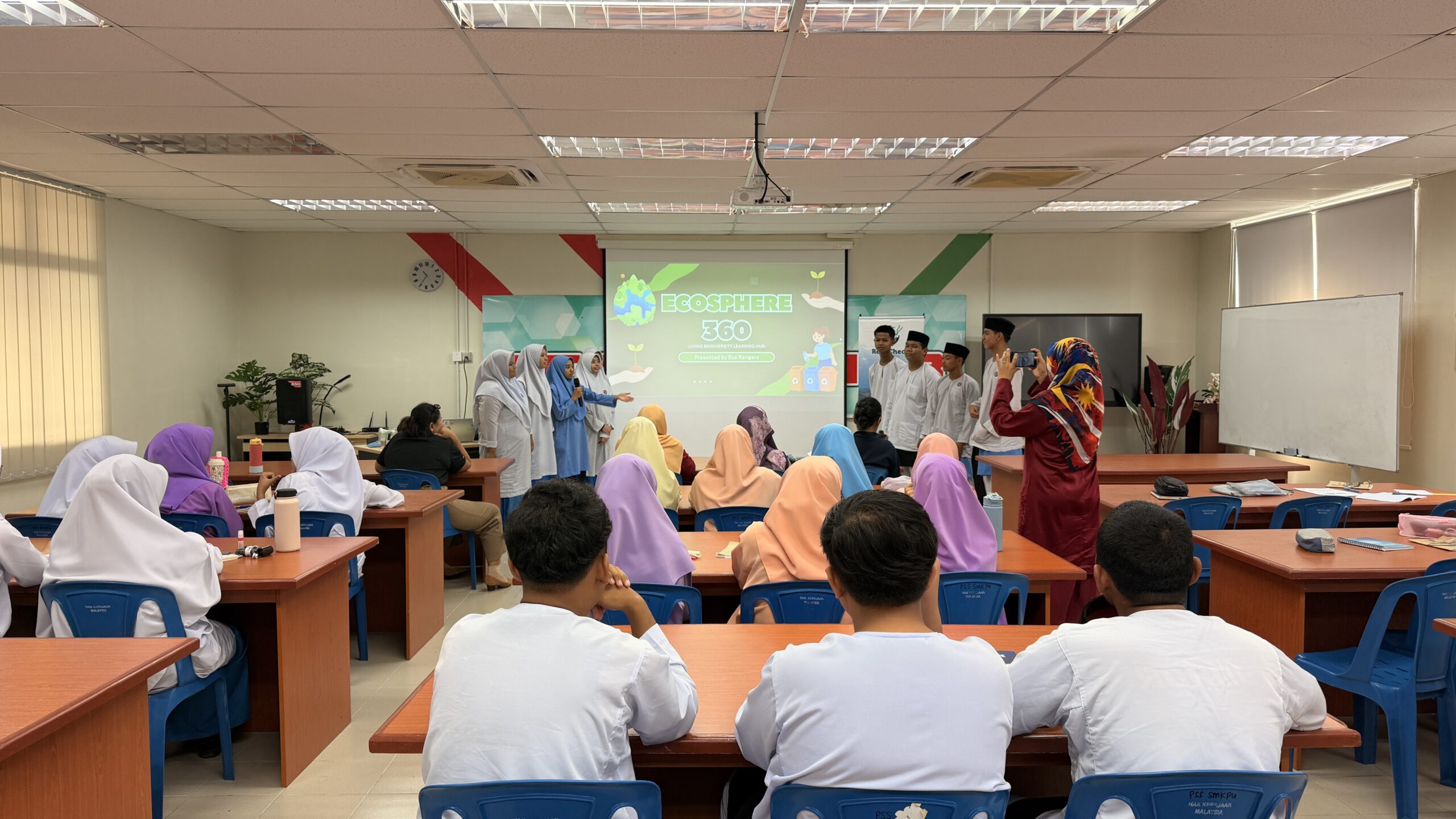
Group presentation during the Mini Grant competition
2. SMK Adela
Building on last year’s engagement, 36 Form 1 students took part in a Marine Ecosystem Awareness session and The Ocean Heroes group game. They then created and presented their own marine awareness campaigns, turning what they learned into messages they could share with their peers.
3. SK Kampung Baru Pasir Gogok
Students continued their seagrass learning through hands-on activities, identifying local seagrass species and monitoring Enhalus acoroides seedlings at their school nursery. By measuring growth and checking water quality, they are gaining first-hand experience in caring for a marine ecosystem found within their own community.
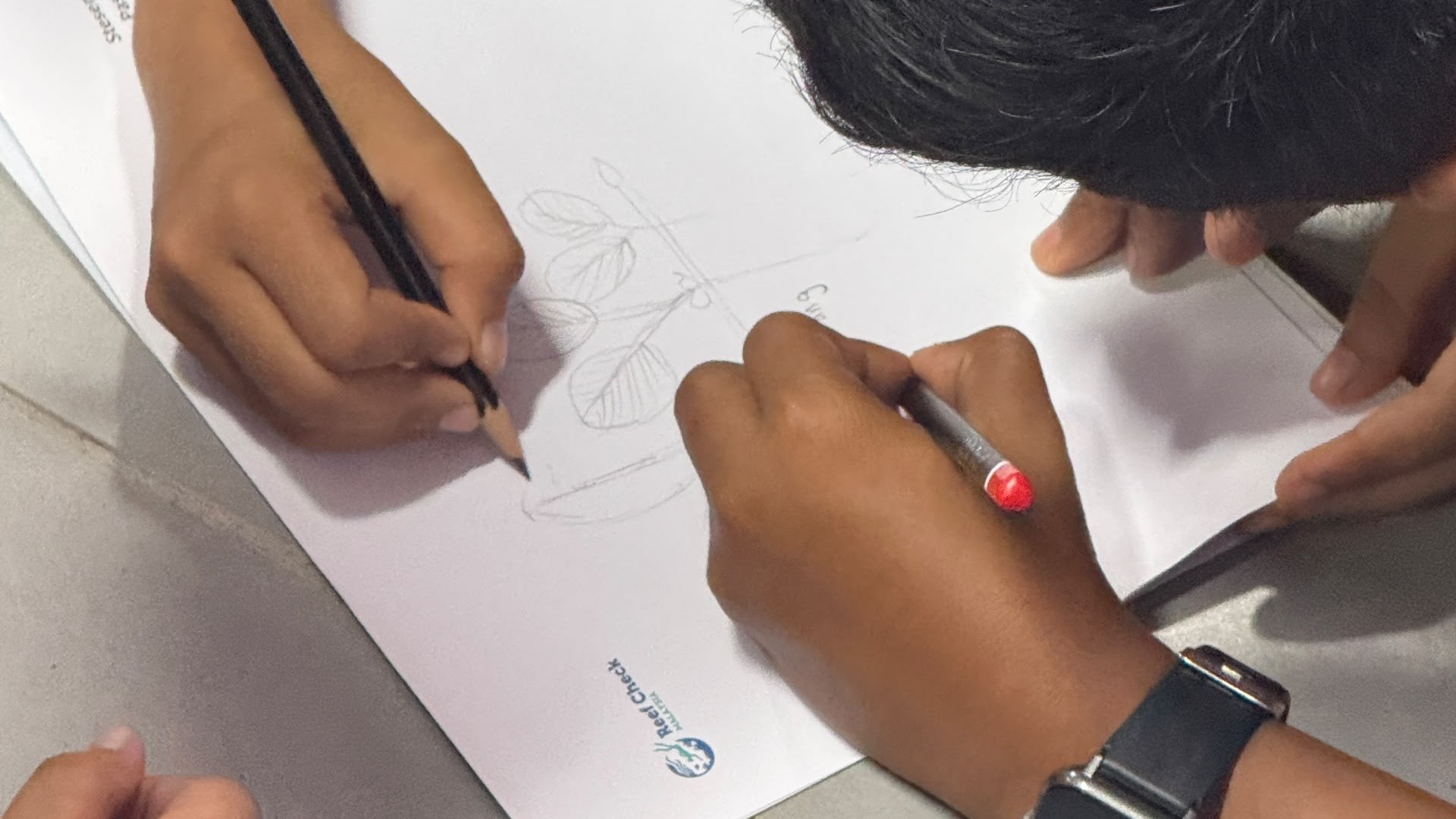
Students drawing seagrass plants during the activity
Checkout these stories
Why supercharging ocean protection of at least 30% of the Earth area is critical for human health and economic wellbeing
The oceans have taken care of us for generations. They are one of our biggest sources of natural capital, accounting for 70% of the earth’s surface. Unfortunately, decades of uncontrolled exploitation of our ocean resources has resulted in escalating pollution-induced climate change, allowed the exacerbation of plastic pollution, caused the collapse of many fisheries, destroyed biodiversity and in the end, negatively impacted our economy and social wellbeing.
Would re-energising economies for a post-Covid-19 world mean rolling back on environmental protections on a rapidly changing ocean?
PART 1: SETTING THE SCENE
The Covid-19 pandemic changed almost everything. However, it has shown that large-scale urgent change is possible. The unprecedented level and speed of policy and legislative actions demonstrated our capacity to adapt in the face of profound suffering and loss to our health, livelihoods, economies, and behaviours.

Why Malaysia’s New National Tourism Strategy is a Milestone for the Economy and Conservation
Reef Check Malaysia (RCM) has long been an advocate for a more inclusive, sustainable marine tourism industry in Malaysia, and as such we are pleased to express our strong support for the new National Tourism Policy, announced recently by the Prime Minister.
…it’s how we do tourism that is important.