The Beginning of CMCG
The Tioman Marine Conservation Group has been successfully implementing conservation programmes for over 10 years now – all of it done by people from the local community who we have trained up. The group is now led by Shahir, our Programme Manager in Tioman – himself who was once a member of TMCG and a member of the local community.
The other Community Marine Conservation Groups (CMCGs) that we support (Mersing, Redang, Semporna) are between 4 and 5 years old. In Redang, the leader of the group, Muhaimin, first “worked” with RCM back about 10 years ago when he participated in our school education programme…now he works with us. Similarly in Mersing and Semporna, most of our staff are members of the local community.
The Numbers Tell The Story
The results that these groups have achieved are very encouraging. In 2025 alone, these local community groups have:
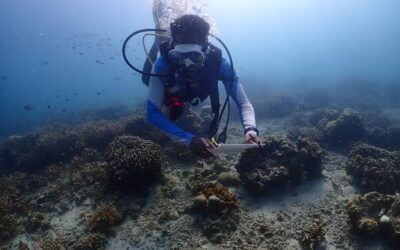
- Conducted Reef Check monitoring surveys at 140 sites – that’s almost half of the entire annual national survey programme
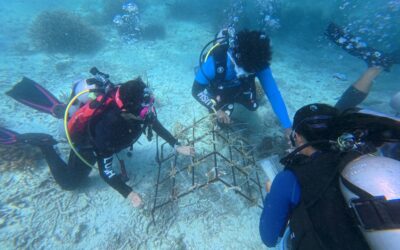
- Planted over 7,000 coral fragments and conducted monitoring and maintenance of restoration efforts in 8 locations
- Removed over 50 ghost nets and 1,600 pieces of discarded fishing gear from reef sites in all locations
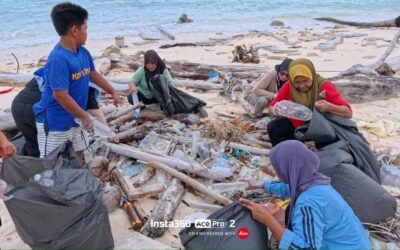
- Conducted 30 underwater clean-ups, removing 757kg of trash, and beach clean-ups that collected over 7,600 kg of trash
- Reached out to over 4,500 people through stakeholder consultations and other awareness events.
This year we have launched two more CMCGs – in Mantanani Island and in Kunak Darvel. More are on the way.
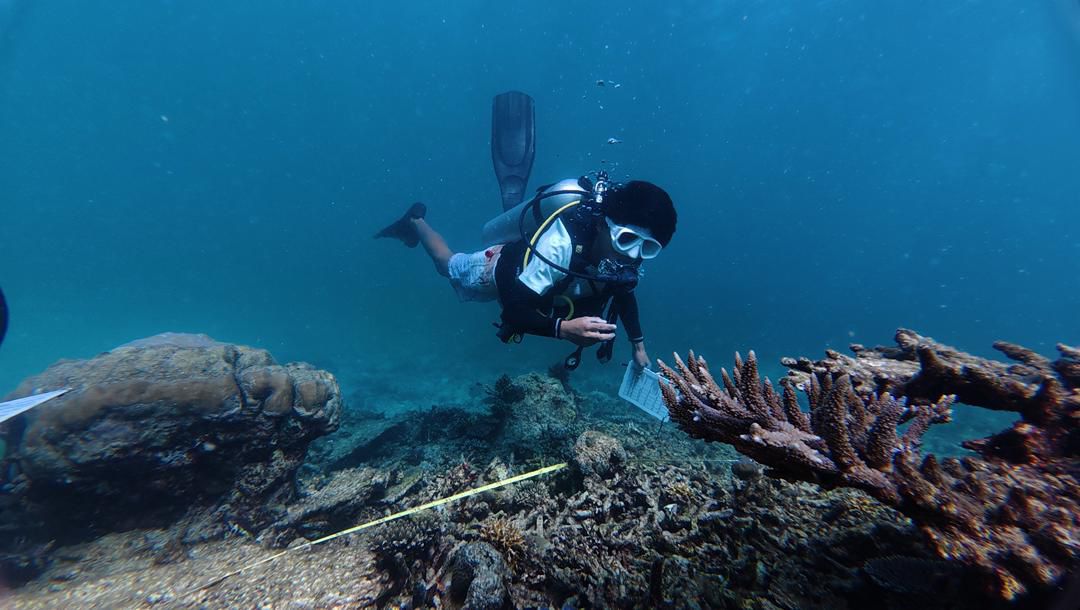
Mantanani Marine Conservation Group has conducted their first Reef Check survey
Our latest Newsletter provides an update on what the CMCGs have been up to recently so, sign up to get it delivered straight to your inbox. And you can find the 2025 CMCG report on our website.
Why The CMCGs?
Why are we putting so much faith – and investment – into these groups? Apart from the obvious conservation successes highlighted above, what have we achieved?
First, we have shown that community-based conservation works. Look again at the numbers. My favourite is the fact that the local communities are now doing their own coral reef monitoring.
Back in the early days of Reef Check Malaysia (RCM), I was fortunate to travel to locations all around Malaysia to conduct surveys. I recall being at Scuba Junkie in Mabul, sitting in the dive centre entering data from the surveys we (myself and a group of volunteers not from the community) had just finished. The locals working in the dive centres were very interested in the picture of what the data were showing us about the state of their reefs.
But somehow it wasn’t their data. It was some outsider telling them what was happening. So…limited buy in.
Now, it’s not me, or a bunch of other outsiders telling local communities what is happening, what is going wrong – it’s their peers. Brothers, uncles, cousins – other members of their community are doing the surveys, gathering the data, learning to interpret it, and passing on the message about the health of their reefs through organic, local networks. It’s a much more powerful and meaningful message.
Second, we have shown that capacity building is good for the community. Early volunteer members of the CMCGs, who we pay a small allowance for participating in activities, have become full-time employees. Or taken new jobs in local companies – tourism operators, mainly – jobs they could access because they took the time to get trained, and get some experience. So…conservation pays.
And finally, I think we can show that awareness of conservation issues has increased, more people understand why we need to protect marine resources, for example, or why we need to limit fishing, manage waste, control development.
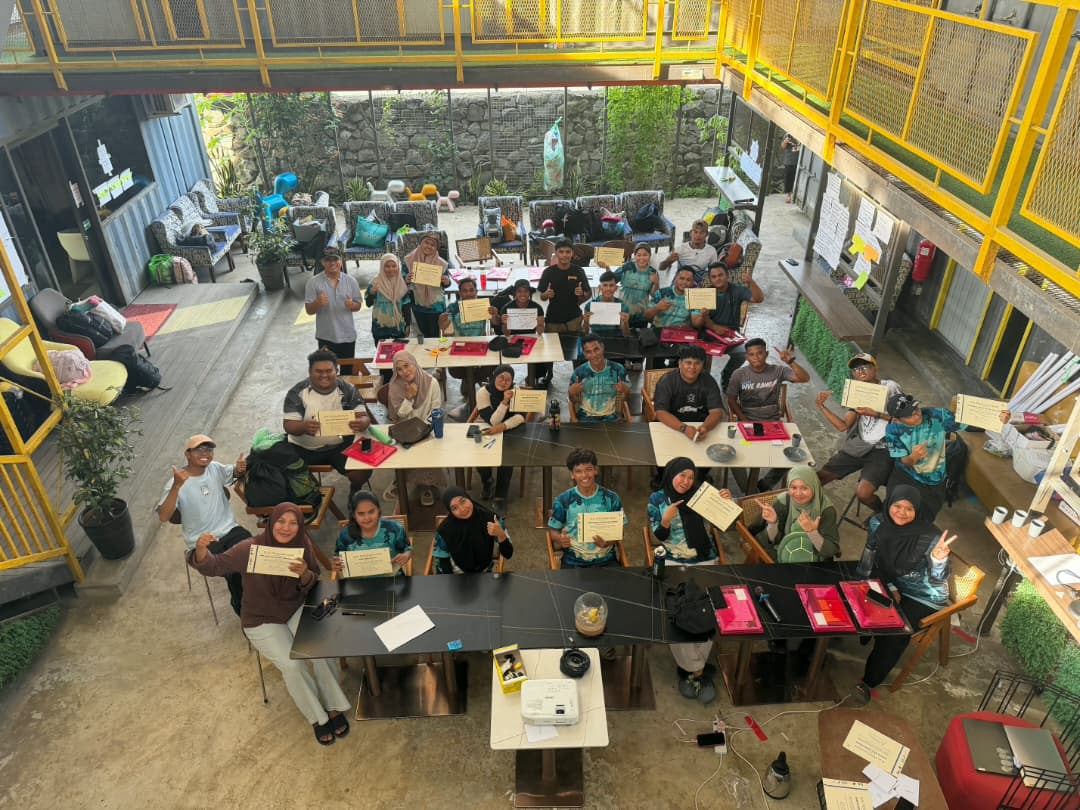
CMCGs in Semporna joined our capacity-building workshop to strengthen their knowledge and skills.
What Needs To Happen Next?
So that’s the good news. What do we need to do next?
Two things. First, we would like to see formal recognition of the role of these CMCGs in managing the islands’ resources.
I’ve said it before, and I’ll probably say it again: both national policy (National Policy on Biological Diversity, RMK 13) and international agreements (Global Biodiversity Framework, SDGs) emphasise the role of IPLCs (Indigenous People & Local Communities) in resource management.
And yet there is still no mechanism or platform or channel (call it what you will) that makes this a reality.
We are working on two fronts:
- First, the Protected Area Management Body (PAMB) concept, a body that represents all stakeholders in decision making on resource management. We are discussing pilot sites in Terengganu, Pahang and Johor, but much work remains to make this a reality.
- Second, we are collaborating with a group of like-minded marine conservation organisations and potential funders to propose the establishment of a Thematic Working Group (TWG) on coastal and marine resource conservation as part of the implementation mechanism of the National Policy on Biological Diversity. Through this, we will be able to work more closely with NRES, and advocate for greater participation by local communities.
We can only ensure true empowerment of local communities by involving them in decision making on natural resource use and protection.
Expanding The Narrative
We need to stop thinking about individual CMCGs and start thinking of them as part of a national network of community-based conservation groups making an important contribution to resource protection nationwide.
They need recognition, and they need funding.
We encourage the government to consider how this can be done, and to support the conservation efforts that these groups are undertaking.
Do I need to say it again?
Reefs, and connected ecosystems, are critical in food security and jobs. Protecting them means protecting our future.
If you’d like to support us, you can follow our social media pages for any updates on our work and volunteering opportunities, or you could also donate towards our cause.